
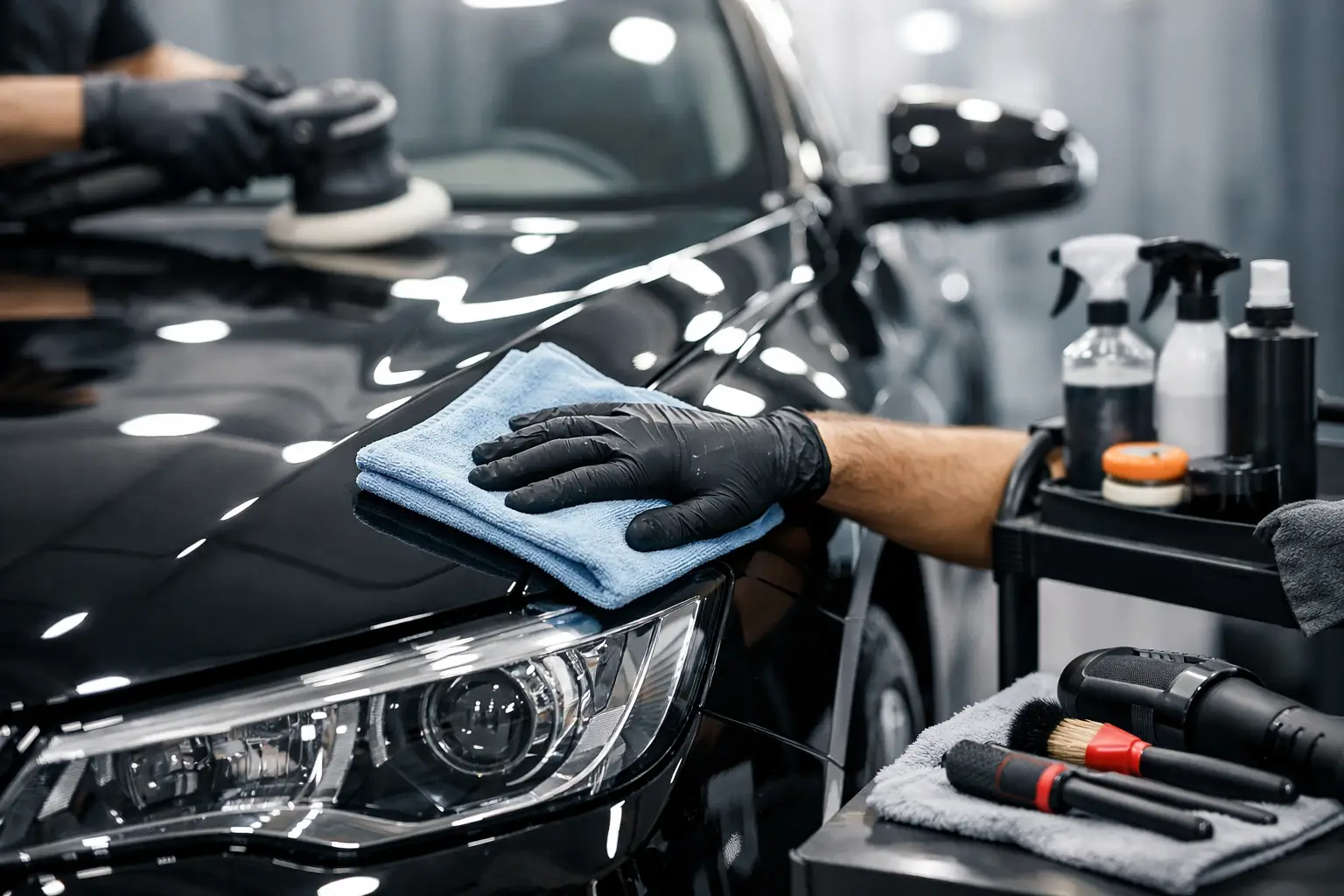
A black vehicle looks incredible for about 15 minutes after a basic wash. Then the dust settles, the water spots show up, and the swirl marks come back into view under direct sun. That cycle is exactly why a car detailing maintenance program makes sense for drivers who want more than a temporary clean. It creates a consistent plan for keeping a vehicle protected, presentable, and easier to care for between major correction or restoration services.
For many owners, the problem is not a lack of effort. It is inconsistency. A quick tunnel wash here, a missed interior cleanup there, and a few months of Chicago-area weather can dull paint, stain trim, and wear down the cabin faster than expected. A maintenance program brings structure to vehicle care, which usually leads to better results and lower long-term cost than waiting until the car looks neglected.
What a car detailing maintenance program actually does
A true maintenance program is not the same thing as getting random washes whenever the car looks dirty. It is a scheduled approach built around preserving prior detailing work and slowing down the damage that daily driving causes. That includes road film, brake dust, salt residue, UV exposure, bird droppings, tree sap, spills, body oils on leather, and the fine abrasion that comes from poor washing habits.
The goal is simple. Keep the vehicle in a condition that never drifts too far from excellent. When paint, trim, wheels, carpets, and upholstery are cared for at regular intervals, they do not need as much aggressive correction later. That matters whether you drive a luxury SUV, a daily commuter sedan, or a weekend sports car.
For some vehicles, maintenance is mostly about appearance. For others, it is also about protection and value retention. If you have already invested in paint correction, ceramic coating, interior protection, or odor removal, routine upkeep helps those services perform the way they should.
Why routine detailing beats occasional deep cleaning
There is a common mistake car owners make. They assume two major details per year will offset months of neglect. Sometimes that is enough for lightly used vehicles kept indoors. More often, it is not. Once contamination bonds to paint, brake dust bakes onto wheels, or interior dirt gets ground into carpets and stitching, cleanup becomes more time-consuming and more expensive.
Routine maintenance keeps those issues from building up. A properly maintained exterior sheds contamination more easily, which means safer washing and fewer opportunities to install scratches. Interiors also benefit from regular attention. Dust, crumbs, skin oils, and moisture do more damage when they sit for weeks or months.
There is also the matter of convenience. Busy professionals and families usually do not want to spend a Saturday recovering a vehicle from avoidable wear. Regular appointments are easier to manage than emergency cleanup after the car has reached a breaking point.
What should be included in a car detailing maintenance program
The right program depends on the vehicle, how often it is driven, and what condition it is starting from. Still, most quality maintenance plans should cover the areas that decline fastest.
Exterior washing and drying
This is the foundation. Proper hand washing, careful wheel cleaning, safe drying methods, and attention to door jambs help preserve gloss and reduce marring. If the vehicle has ceramic coating, these visits also help the coating stay clean and hydrophobic instead of getting clogged with grime.
Wheel, tire, and trim care
Wheels collect some of the harshest contamination on the vehicle. Brake dust, road salt, and grime can stain finishes if ignored. Tires and exterior trim also need dressing and protection that looks clean rather than greasy.
Interior reset
A maintenance visit should address vacuuming, wipe-down of hard surfaces, glass cleaning, and light treatment of high-touch areas. On family vehicles, this is often one of the biggest quality-of-life improvements. The cabin feels fresher, cleaner, and easier to maintain between visits.
Protection top-ups
Wax, sealant, ceramic boosters, fabric protectants, and leather conditioners all have lifespans. A maintenance program should account for that. Protection is not a one-time event. It needs to be refreshed on a schedule that matches use and storage conditions.
Inspection for early problems
One overlooked benefit of recurring detailing is that small issues get noticed earlier. Water spotting, etching, staining, overspray, oxidation, and abnormal wear are easier to correct when caught early.
How often should maintenance happen?
There is no single perfect schedule. It depends on where the car lives and how it is used.
A garage-kept weekend car may only need light recurring service every four to six weeks. A daily driver parked outside, commuting through traffic, and exposed to winter salt may need more frequent attention. Families with kids, pets, or regular food and drink use inside the car often benefit from a tighter interior schedule as well.
Seasonality matters too. In the Chicago suburbs, winter and early spring usually demand more from exterior care because salt, slush, and road film build up fast. Summer brings UV stress, bug residue, and hard water spotting. A good maintenance plan adapts instead of treating every month the same.
If you already have ceramic coating, that does not mean you can stretch maintenance indefinitely. Coatings reduce effort, but they do not make contamination disappear. They work best when they are cleaned correctly and inspected regularly.
Who benefits most from a maintenance program?
Drivers who care about presentation usually see the value quickly, but this type of service is not only for exotic or luxury vehicles. It fits several kinds of owners.
Busy professionals benefit because they want the vehicle to stay sharp without spending personal time managing the process. Families benefit because regular interior care prevents the cabin from becoming difficult to recover. Lease holders benefit because consistent upkeep can help reduce visible wear at turn-in. Enthusiasts benefit because paint clarity, wheel finish, and interior condition are easier to preserve than to rebuild.
It is also a smart move for anyone who has already paid for premium services. If a vehicle has gone through paint correction, ceramic coating, or deep interior restoration, skipping maintenance often wastes part of that investment.
What separates professional maintenance from a car wash subscription
This is where many owners get tripped up. A low-cost wash membership sounds similar on paper, but the outcome is usually very different.
A standard wash service focuses on speed and volume. A professional maintenance program focuses on condition. That difference shows up in wash methods, tools, chemicals, inspection, and consistency. Automatic systems may be convenient, but they often increase swirl marks over time, especially on darker paint. They also do very little for interior condition, trim preservation, or monitoring problem areas.
Professional maintenance is more selective. It is designed to support the finish, not just remove obvious dirt. That matters if you want showroom-level results to last instead of fade after a few weeks.
How to choose the right program
Start with honesty about how the vehicle is used. If it sees daily commuting, kids, pets, parking lots, and weather, choose a plan that reflects real wear instead of ideal conditions. If it is a collector vehicle, focus more on finish preservation and controlled cleaning.
You should also look at the starting condition. A maintenance plan works best after the vehicle has been properly reset. If the paint is heavily contaminated or the interior has embedded stains and odors, an initial deep detail may be necessary first. Maintenance is meant to preserve a strong baseline, not replace corrective work.
Service flexibility matters too. Some owners prefer studio appointments for more controlled conditions. Others need mobile service because convenience is the deciding factor. The best program is the one you will actually keep.
Elite Luxe Auto Detailing sees this firsthand with clients who want premium results without letting vehicle care disrupt their schedule. Consistency is often the difference between a car that always looks well kept and one that swings between spotless and overdue.
The long-term payoff
A car detailing maintenance program is not about chasing perfection every week. It is about staying ahead of decline. Paint stays glossier. Interiors stay more comfortable. Protective products last longer. Future correction work is often lighter, which can save money and preserve more of the original finish.
There is a trade-off, of course. Ongoing maintenance is a commitment, and not every vehicle needs the same level of service. But for owners who value appearance, protection, convenience, and resale condition, the math usually works in favor of regular care.
The best time to maintain a vehicle is before it looks like it needs help. That is when detailing shifts from repair to preservation, and that is where the results become much more rewarding.
