Your daily driver does not live under a cover. It handles parking lots, construction dust, rain, tree sap, UV exposure, grocery runs, and, around Chicagoland, months of salt and slush. That is why the best ceramic coating for daily drivers is not simply the product with the longest claim on the label. It is the coating system that fits how the vehicle is used, how well the paint is prepared, and how realistically it will be maintained.
For most owners, ceramic coating is a practical investment in keeping a vehicle looking cleaner, glossier, and easier to care for between professional services. It does not make paint invincible, but when selected and installed correctly, it can make a meaningful difference in how a car holds up to everyday wear.
What Makes the Best Ceramic Coating for Daily Drivers?
A strong daily-driver coating should prioritize dependable protection over exaggerated promises. The goal is to create a durable, glossy sacrificial layer that helps contaminants release more easily during washing and reduces the direct impact of UV exposure, road grime, bird droppings, and mineral deposits on the clear coat.
For a commuter, family SUV, or regularly used luxury vehicle, the best option is usually a professional-grade ceramic coating with a realistic durability window and warranty-backed coverage. These coatings are designed to bond with the paint after proper preparation, delivering stronger chemical resistance and longer-lasting hydrophobic performance than most spray-on sealants.
The quality of the installation matters as much as the coating itself. A premium coating applied over embedded contamination, water spots, or visible swirl marks will preserve those flaws beneath its hardened layer. Paint correction and surface prep are what give ceramic coating its crisp, showroom-level finish.
Look Beyond the “Years of Protection” Claim
Ceramic coating packages are often marketed by duration: one year, three years, five years, or longer. Those terms can be helpful, but they should not be the only deciding factor. Durability depends on where the car is parked, how many miles it travels, whether it sees automatic washes, and whether it receives regular maintenance.
A five-year coating on a vehicle washed with harsh brushes every week may not perform like a five-year coating on a garaged car that receives careful hand washes. For many daily drivers, a professionally installed three- to five-year coating is the practical sweet spot. It provides substantial long-term protection without paying for a lifespan the vehicle’s real-world routine may not support.
Why Daily Drivers Benefit From Ceramic Coating
The most noticeable benefit is not usually a dramatic water-beading video. It is the reduced effort required to keep the vehicle presentable. Dirt, pollen, and road film still land on a coated car, but they have less ability to cling to a properly protected surface. Washing is faster, drying is easier, and the paint retains a richer appearance between appointments.
Ceramic coating also provides valuable defense against gradual paint decline. UV rays can contribute to fading and oxidation, especially on vehicles parked outside. Bug splatter, bird droppings, and tree sap are acidic or sticky contaminants that can etch clear coat when left untreated. A coating adds time and makes removal easier, though it is still best to remove those contaminants promptly.
For Chicago-area drivers, winter is another major consideration. Road salt, brine, and dirty snow create a constant layer of contamination on lower panels, wheels, and rear bumpers. Ceramic coating helps simplify winter washing and reduces how aggressively grime bonds to painted surfaces. It is not a substitute for regular rinsing, especially around wheel wells and undercarriage areas, but it gives the exterior a better line of defense.
Ceramic Coating Is Not Paint Protection Film
One of the most common misunderstandings is expecting ceramic coating to stop rock chips, deep scratches, or parking-lot impacts. Ceramic coatings are thin, hardened protective layers. They improve chemical resistance, gloss, and washability, but they do not have the thickness needed to absorb a high-speed stone strike.
Drivers who frequently use highways, own vehicles with low front ends, or want maximum protection for a new car should consider pairing ceramic coating with paint protection film on high-impact areas. The front bumper, hood edge, mirror caps, rocker panels, and behind-the-wheel areas are common choices. Paint protection film handles physical impact better, while ceramic coating makes the remaining painted surfaces easier to maintain.
This combination is especially worthwhile for luxury and exotic vehicles, but it can also make sense for a well-kept commuter vehicle that will see years of expressway driving.
Preparation Determines the Final Result
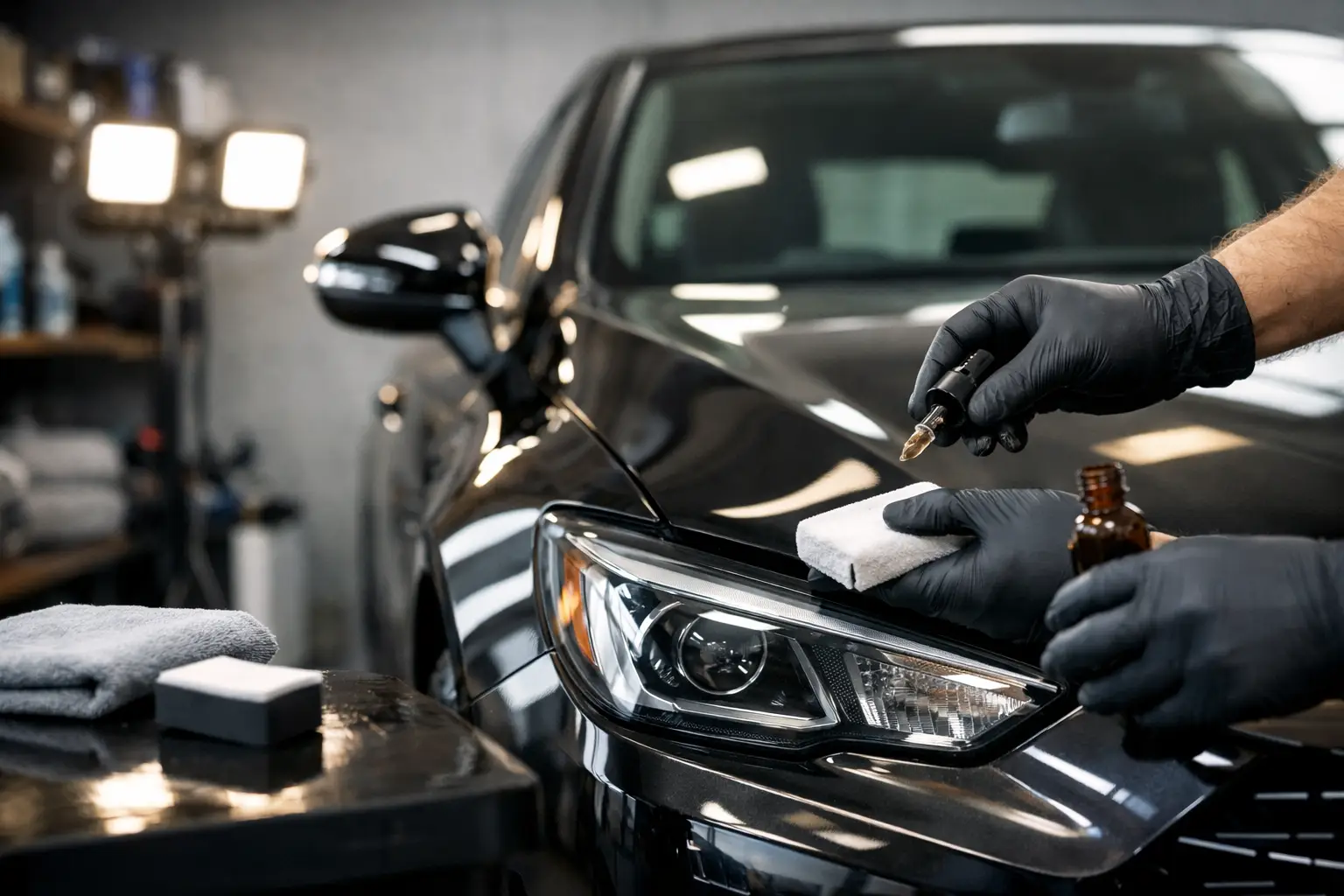
A professional ceramic coating service should begin well before the coating bottle is opened. The vehicle needs a thorough wash, chemical decontamination, and mechanical decontamination to remove bonded debris from the paint. In many cases, paint correction follows to reduce swirls, light scratches, haze, and oxidation.
This work is not cosmetic busywork. Coatings bond best to a clean, properly refined surface. More importantly, they lock in the appearance of the paint at the time of installation. If the finish is dull or marred beforehand, a coating can add gloss, but it will not erase the underlying defects.
The right level of correction depends on the vehicle and the owner’s expectations. A newer daily driver may only need a light polishing step to improve clarity. An older vehicle with tunnel-wash swirls, scratches, or neglected paint may benefit from more intensive correction before protection is applied. A reputable detailer should assess the paint rather than applying the same package to every car.
Choosing the Right Coating Package
A daily driver does not always need the most expensive coating available. The best value comes from matching the package to ownership plans, driving conditions, and maintenance habits.
If you lease a vehicle or expect to trade it in within a couple of years, a shorter-term coating may be the sensible choice. It can preserve the finish and reduce upkeep without paying for protection that extends beyond your ownership period. If you purchased the vehicle and plan to keep it for five years or more, a longer-term professional coating can provide better value over time.
Color also plays a role. Dark paint benefits significantly from correction and coating because it reveals swirls, water spots, and dust more readily. White, silver, and light gray vehicles still gain protection and easier cleaning, even if their gloss improvement is less dramatic at first glance. For any color, the benefit becomes clear when the vehicle continues to look well cared for after repeated seasons of driving.
Maintenance Is Part of the Protection Plan
Ceramic coating reduces maintenance. It does not eliminate it. Even the best coating collects dirt, traffic film, brake dust, and mineral-rich water deposits. Regular washing prevents those contaminants from sitting on the finish long enough to compromise the coating or create etching.
For daily drivers, a hand wash or touchless wash every two to four weeks is a reasonable baseline, adjusted for weather and mileage. During winter, more frequent rinsing may be necessary to remove salt. Avoid automatic brushes whenever possible, since they can introduce the same swirl marks that paint correction was meant to remove.
Use pH-balanced wash products, clean microfiber towels, and proper drying techniques. When water behavior begins to feel less dramatic, that does not automatically mean the coating has failed. It may simply need a decontamination wash or professional maintenance service to remove mineral buildup and restore its performance.
At Elite Luxe Auto Detailing, coating care is approached as an ongoing investment in the vehicle’s appearance, not a one-time transaction. Periodic inspections and maintenance help ensure the protection continues to perform as intended through changing seasons and daily use.
When Ceramic Coating May Not Be the Right First Step
Ceramic coating is an excellent solution for many owners, but it is not automatically the first priority for every vehicle. If clear coat is peeling, paint has major oxidation, or there are deep scratches and body damage, restoration or repair should come first. Coating cannot correct failing paint.
It may also be unnecessary for an owner who rarely washes the vehicle, uses frequent brush washes, and has no interest in preserving the finish. In that situation, a quality wax or sealant may be a more realistic short-term option. Ceramic coating delivers the best return when the owner values a clean vehicle and is willing to follow basic care practices.
The right ceramic coating should make ownership easier, not create another chore. Choose a package built for the miles you drive, have the paint prepared to the standard you want to preserve, and maintain it with simple, consistent care. Your vehicle will still face daily life, but it will be far better equipped to come through it looking like it belongs in the driveway, not the detail bay.
