
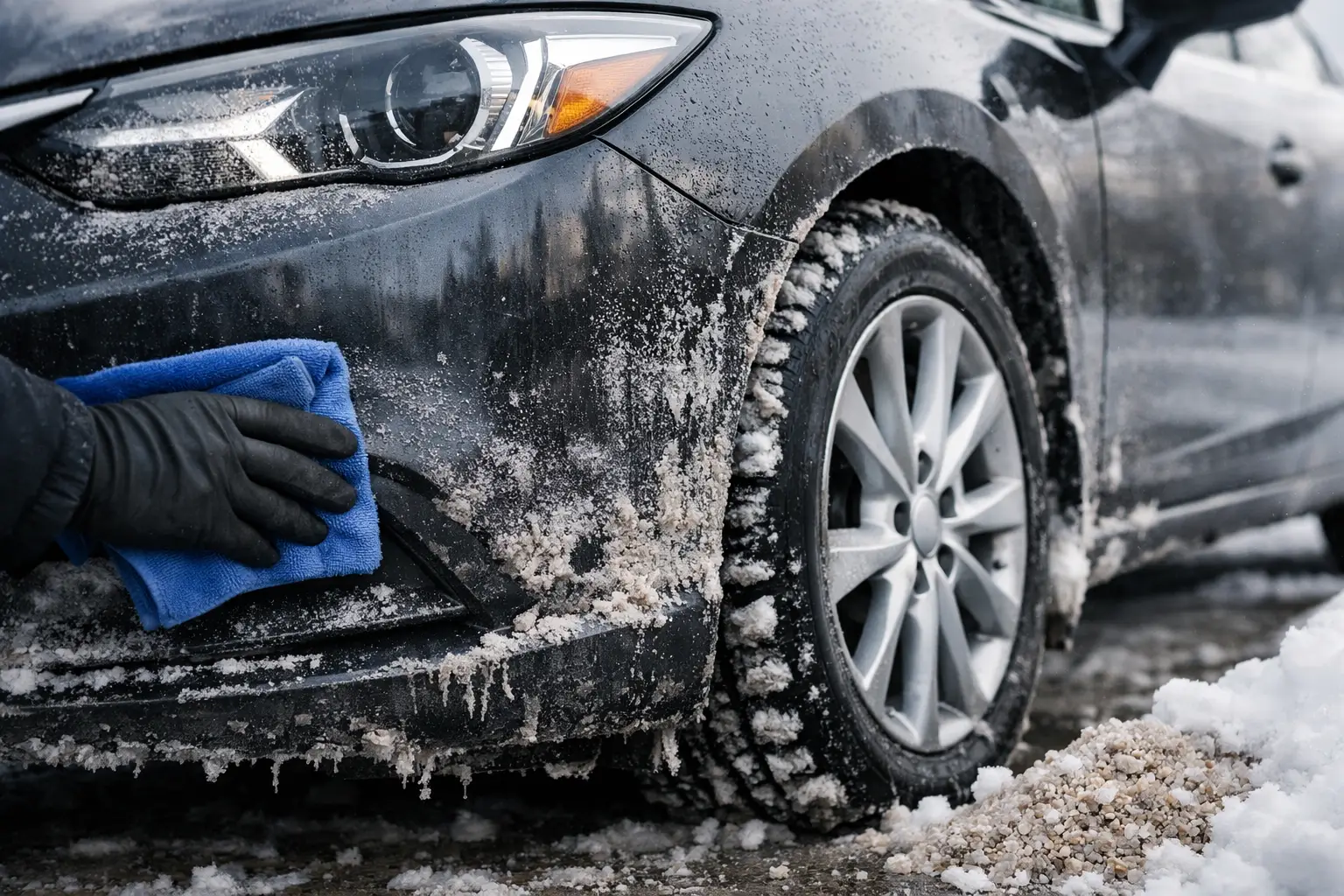
Chicago-area winter roads can turn a freshly detailed vehicle dull in a matter of days. Road salt, liquid de-icer, slush, and grit collect along the lower doors, rocker panels, bumpers, wheels, and rear hatch, where they are easy to overlook until the finish has already lost its clarity. To prevent winter salt paint damage, your car needs more than an occasional rinse. It needs a consistent washing routine, smart protection, and attention to the areas that receive the heaviest exposure.
Salt does not usually create paint damage overnight. The problem is prolonged contact. Moisture keeps salt active, road grit adds abrasion, and dirty buildup traps contaminants against the finish. A thoughtful winter care plan protects the appearance of your vehicle now while helping preserve its value for the years ahead.
Why Winter Road Salt Is Hard on Automotive Paint
Road salt is used because it lowers the freezing point of water, improving traction and helping roads clear faster. For your vehicle, though, it creates a corrosive residue that sticks to paint, metal, plastic trim, wheels, brake components, and the undercarriage. Liquid brine can be especially persistent because it reaches narrow seams and dries into a film before it is obvious.
Paint itself is protected by clear coat, but clear coat is not invincible. Fine road sand and grit can scratch it as grime moves across the surface. Salt residue also holds moisture against vulnerable areas, increasing the risk of corrosion where paint is chipped or where metal is exposed. The lower portion of the vehicle takes the worst of it, but salt spray can reach the hood, roofline, mirrors, and rear panels during highway commuting.
This is why a car that looks reasonably clean from a distance can still need attention. The buildup hiding behind the wheels and beneath the rocker panels often matters more than a light layer of dust on the hood.
How to Prevent Winter Salt Paint Damage Before It Starts
The best time to prepare your vehicle for winter is before the first major treatment of the roads. A professional exterior detail removes bonded contamination and gives protection a clean surface to adhere to. Applying protection over embedded grime limits its performance and can leave the finish feeling rough even after a wash.
For owners who want durable, high-gloss protection, a ceramic coating is a strong option. Quality coatings create a slick, chemical-resistant layer that makes winter grime easier to remove and helps reduce staining from road film. They also maintain better water behavior than a traditional wax through repeated washing and freezing conditions.
That said, a ceramic coating is not a force field. It does not prevent rock chips, eliminate wash-induced scratches, or make salt safe to leave on a vehicle for weeks. Its real advantage is easier maintenance and more dependable protection when it is paired with proper washing. For a newer luxury vehicle, an enthusiast-owned car, or any vehicle with corrected paint, that added margin of protection can be well worth it.
A sealant or high-quality wax can also provide meaningful seasonal protection at a lower initial investment. The trade-off is longevity. Wax can wear down faster during a Chicago winter, particularly on daily drivers that see slush, highway miles, and frequent washes. It may need to be refreshed several times during the season.
Address Existing Chips Before Salt Reaches Them
Small paint chips are easy to postpone in summer. In winter, they become more urgent because saltwater can reach the exposed substrate. Touch-up paint will not always create an invisible repair, especially on complex metallic colors, but it can seal a vulnerable spot and limit further deterioration. A detailing professional can also identify whether a mark is a surface scratch, paint transfer, or a deeper defect that needs body shop repair.
Wash More Often Than You Think You Need To
A winter wash should be based on exposure, not a calendar date. If roads have been heavily salted, plan to wash within several days, even if your vehicle does not look especially dirty. For a daily driver in Arlington Heights, Schaumburg, Palatine, or nearby suburbs, washing every one to two weeks is a practical baseline during active winter weather. After a major storm or several days of wet, treated roads, washing sooner is better.
The priority is not simply making the paint shine. It is removing salt from the lower panels, wheel barrels, wheel wells, undercarriage, door jambs, fuel door area, and trunk or hatch seams. These areas hold moisture and are often missed by a quick exterior wash.
A touchless wash can be a convenient choice when temperatures are low and time is limited. It is generally gentler than a poorly maintained brush tunnel, but it may not fully remove heavy road film from lower body panels. If you use a touchless wash, choose an option with an underbody rinse and inspect the vehicle afterward. A professional hand wash or properly performed maintenance detail will usually provide a more complete result, especially after repeated salt exposure.
Avoid using a dry towel to wipe away salt dust. Salt crystals and road grit can drag across the clear coat and leave fine scratches. If you need to clean a small area between washes, use a quality rinseless wash product with clean microfiber towels and enough lubrication. Never treat a heavily salted vehicle as a quick spot-cleaning job.
Protect the Areas Drivers Commonly Miss
The paint is visible, but corrosion often begins in places that receive less attention. During winter maintenance, make sure the following areas are thoroughly rinsed and cleaned:
- Wheel wells, suspension components, and the undercarriage
- Rocker panels, pinch welds, and lower door edges
- Behind the wheels and inside wheel barrels
- Door jambs, weatherstripping, and trunk or hatch seams
- Front grille openings, license plate areas, and lower bumper trim
These are not cosmetic details alone. Salt-laden moisture can sit in seams and behind liners long after the exterior panels look clean. A careful rinse is especially valuable after temperatures rise above freezing, since melting slush releases trapped saltwater and allows it to move deeper into those areas.
Do Not Forget Wheels and Brake Dust
Wheels see a concentrated mix of salt, grime, and brake dust. Some factory wheel finishes are durable, but harsh wheel chemicals or aggressive brushes can dull delicate painted, polished, or satin surfaces. Use a wheel-safe cleaner, soft brushes, and separate wash tools from those used on paint.
A wheel coating can make winter cleanup noticeably easier, particularly on vehicles with intricate spoke designs. It reduces how firmly brake dust and road film bond to the surface, which means less scrubbing is needed during each wash. Less scrubbing helps preserve the finish over time.
Use the Right Winter Washing Method
Washing in cold weather requires a little judgment. If temperatures are well below freezing, avoid saturating door jambs and weatherstripping immediately before parking outside. Water can freeze around door seals, handles, and locks. When possible, wash during the warmest part of the day or use a heated indoor facility.
After washing, dry door jambs, mirrors, fuel doors, and rubber seals carefully. Opening and closing each door once after drying can help prevent seals from sticking. Applying a suitable rubber protectant to clean weatherstripping can also reduce freezing and keep the material supple.
For paint, the safest approach is still a thorough pre-rinse followed by gentle contact washing with clean mitts and plenty of lubricating shampoo. The pre-rinse matters because it removes loose salt crystals and grit before anything touches the clear coat. Reusing dirty towels or wash water is one of the fastest ways to trade winter grime for swirl marks.
Make Winter Protection Part of Ongoing Maintenance
Winter is not the season to wait for a full spring cleanup. By spring, months of contamination may have left the paint rough, dulled trim, and allowed salt residue to remain in hard-to-reach areas. Regular maintenance keeps the vehicle presentable through the season and makes spring correction far less likely.
A professional maintenance schedule is useful for busy owners who want consistent results without monitoring every storm. Elite Luxe Auto Detailing can maintain protected vehicles with careful exterior cleaning, wheel and underbody attention, and paint-safe methods designed to preserve gloss rather than simply remove visible dirt.
Your parking situation also affects the right schedule. A garage-kept weekend vehicle may only need service after being driven on treated roads. A daily commuter parked outdoors needs more frequent attention, even if it has ceramic protection. There is no single interval that fits every car, but there is one reliable rule: do not let salt accumulate simply because the forecast remains cold.
A clean, protected vehicle is easier to enjoy when winter finally loosens its grip. Treat every wash after salted roads as a small investment in paint clarity, corrosion prevention, and the showroom-level finish you expect when spring arrives.
