
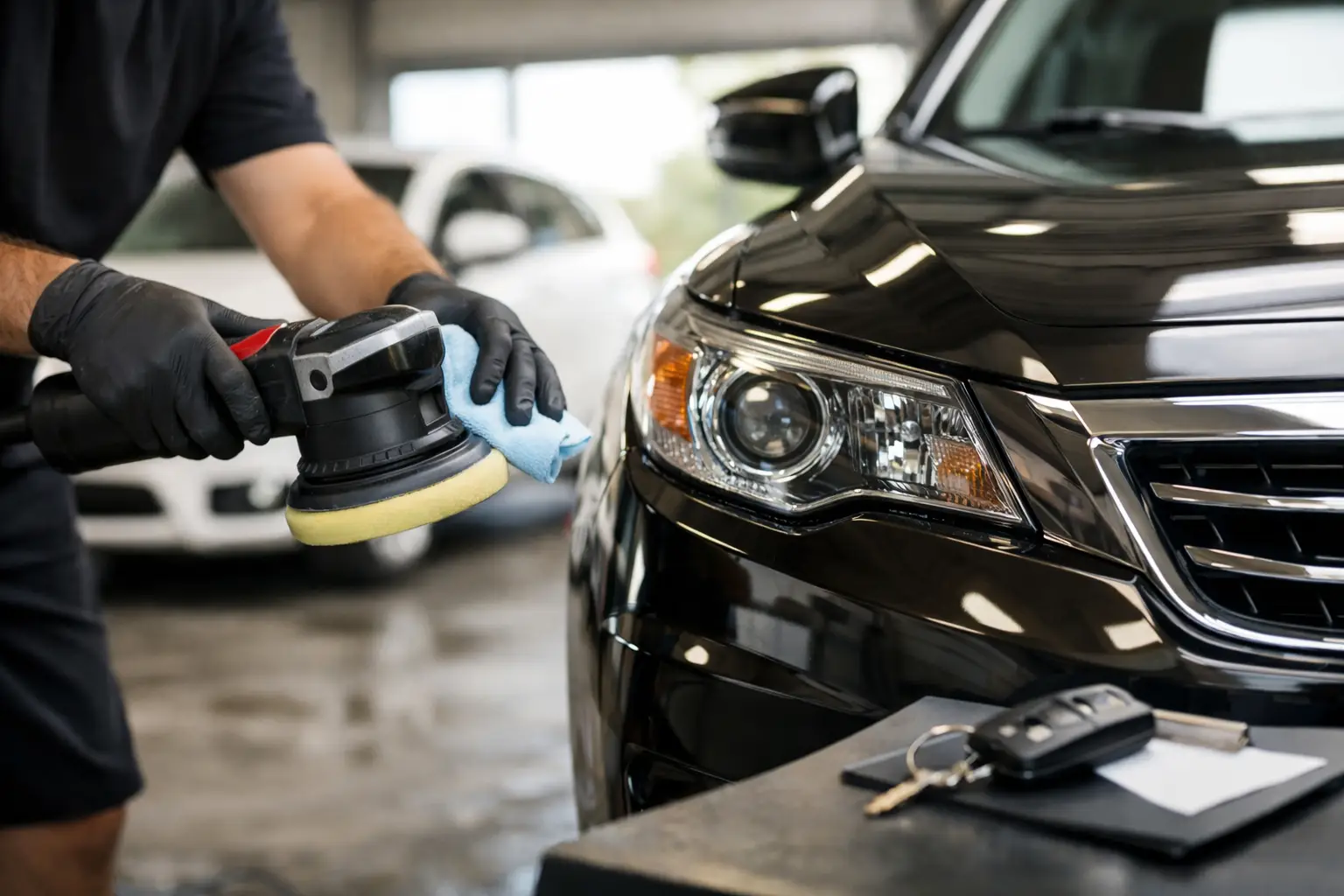
A trade-in appraisal can start before the appraiser opens the driver’s door. Dull paint, salt-stained carpets, pet hair, lingering odors, and an overfilled cargo area all shape the first impression of how a vehicle has been cared for. A full detail before trade in will not turn a high-mileage vehicle into a low-mileage one, but it can help the car present honestly, cleanly, and at its best.
For owners throughout the Chicago suburbs, this matters even more after a winter of road salt, slush, wet shoes, and daily commuting. The goal is not to hide damage or spend money blindly. It is to remove the signs of neglect that can make a vehicle look less desirable than its actual condition warrants.
What a Full Detail Before Trade In Can Change
Dealers use market data, vehicle history, mileage, mechanical condition, trim level, and local demand to establish trade-in value. Detailing does not erase those fundamentals. A clean vehicle can, however, make the inspection easier and reinforce the impression that the car has received consistent care.
A quality detail improves the areas an appraiser sees and touches right away: paint clarity, wheel condition, glass, door jambs, interior surfaces, carpeting, seats, trunk space, and odor. When those areas are clean, the vehicle’s actual condition is easier to judge. When they are neglected, normal wear can look worse than it is.
This is particularly relevant for vehicles with otherwise strong ownership histories. If you have kept up with oil changes, repairs, and routine maintenance, presenting the vehicle with a stained interior and salt-coated lower panels sends a conflicting message. A full detail helps the appearance match the care that has gone into the vehicle.
It also gives you a better look at the car before the appraisal. Once embedded dirt, residue, and clutter are removed, you may notice a small scuff, windshield chip, torn seam, or missing trim piece worth addressing. Finding those details on your schedule is better than being surprised by them in the dealership lot.
Where Detailing Delivers the Most Value
The interior often has the strongest influence on first impressions because it is where a buyer or appraiser spends time. Deep cleaning carpets and mats, treating upholstery or leather appropriately, wiping down touchpoints, and removing debris from crevices can make a commuter vehicle feel far more cared for. A clean cargo area matters, too, especially for SUVs and family vehicles.
Odor removal can be even more meaningful than visible cleaning. Smoke, pet odors, food spills, and mildew smells can make a vehicle feel difficult to resell because they may require additional reconditioning. Surface fragrance is not a solution. The source of the odor needs to be cleaned and treated, whether it is in the carpets, seats, headliner, ventilation system, or trunk.
On the exterior, a proper hand wash, decontamination, wheel cleaning, and paint-safe finishing treatment can restore gloss without taking unnecessary risks. Chicago-area roads leave behind road film, brake dust, salt residue, and bonded contamination that standard tunnel washes often miss. Clean glass, polished trim, and clear headlights also make a noticeable difference in how complete the vehicle looks.
For a newer vehicle or one with dark paint, light polishing may reduce the fine wash scratches and haze that hide depth and gloss. This can be worthwhile when the paint is fundamentally sound and the car is being traded at a higher price point. Heavy paint correction is a different decision. It takes time and skill, and the return is not always there if the dealership will wholesale the vehicle or if the car has substantial mileage and other condition concerns.
Do Not Detail Past the Point of Return
A full detail should be scaled to the vehicle, not treated as a one-size-fits-all package. Spending heavily to correct every imperfection before trading in a 12-year-old daily driver rarely makes financial sense. The same is true of replacing every worn floor mat, repairing every minor rock chip, or pursuing extensive cosmetic restoration without first understanding the vehicle’s likely trade-in range.
The practical question is simple: will the work make the vehicle easier to appraise and more appealing, or are you trying to make it look like something it is not? Cleaning and protecting are usually smart. Removing odors, shampooing stained carpets, restoring cloudy headlights, and improving severely neglected paint can be sensible. Major bodywork, wheel refinishing, or advanced paint correction may be better reserved for vehicles with stronger resale potential.
If you are unsure, get preliminary trade-in estimates from more than one dealer before approving larger cosmetic work. Be transparent about known mechanical issues and prior damage. A professional detail should reveal a vehicle’s best legitimate condition, not conceal defects that will be found during inspection.
A Practical Timeline Before Your Appraisal
Plan the detail a few days before you intend to visit dealerships or accept an online appraisal. That window keeps the vehicle fresh while giving you time to remove personal belongings and address anything the cleaning process reveals.
Start by emptying the cabin, glove box, center console, door pockets, trunk, and under-seat storage. Remove personal paperwork, garage openers, child seats if they are not needed, charging cables, and loose accessories. Dealers expect signs of use, but clutter makes it harder to see the vehicle and can leave the impression that the rest of the ownership experience has been disorganized.
After the detail, avoid undoing the results. Keep drinks and food out of the vehicle, use clean mats if the weather is wet, and do not schedule the appraisal immediately after a long commute through rain, construction dust, or salted roads. A quick wipe-down of exterior glass and a check for new debris on the floor mats on the day of the appointment is usually enough.
Bring service records if you have them, along with both key fobs, manuals, wheel-lock keys, and any factory accessories. These items are separate from detailing, but together they create a complete and credible presentation. The cleaner the car and the more organized the documentation, the less room there is for uncertainty.
What a Professional Detailer Should Look For
Not every cleaning service is suitable for a pre-trade-in vehicle. Quick washes can leave residue in the jambs, dirty wheels, unaddressed stains, and glossy interior dressings that look artificial under bright dealership lighting. More concerning, improper tools or aggressive chemicals can create scratches, discoloration, or damage just before you hand over the keys.
Look for a detailer who evaluates the vehicle first and recommends work based on its actual condition and trade-in purpose. The service should focus on clean paint, odor-free surfaces, presentable interiors, and safe finishing techniques. If paint enhancement is recommended, ask what level of improvement is realistic and whether it is appropriate for the vehicle’s age, mileage, and expected trade-in value.
Elite Luxe Auto Detailing approaches pre-sale and trade-in preparation with that balance in mind: showroom-level presentation where it counts, without pushing unnecessary restoration work. For busy owners, professional mobile or studio detailing can also remove the stress of trying to prepare a vehicle between work, family schedules, and dealership appointments.
Is a Full Detail Worth It for Every Trade-In?
Not always. A late-model luxury vehicle, a well-maintained SUV, or a vehicle with a strong market value generally has more to gain from a thorough presentation. A car that has been smoked in, hauled pets, or used heavily by a family can also benefit because odor and interior condition may otherwise become the dominant impression.
For an older vehicle with major mechanical needs, accident damage, warning lights, or very high mileage, a focused interior and exterior cleaning may be enough. In those cases, the purpose is to show respect for the vehicle and make the appraisal straightforward, not to chase a number that condition alone cannot support.
The right goal is simple: arrive with a vehicle that looks cared for, smells clean, and allows its true condition to speak for itself. That puts you in a stronger position to discuss the offer with confidence.
