
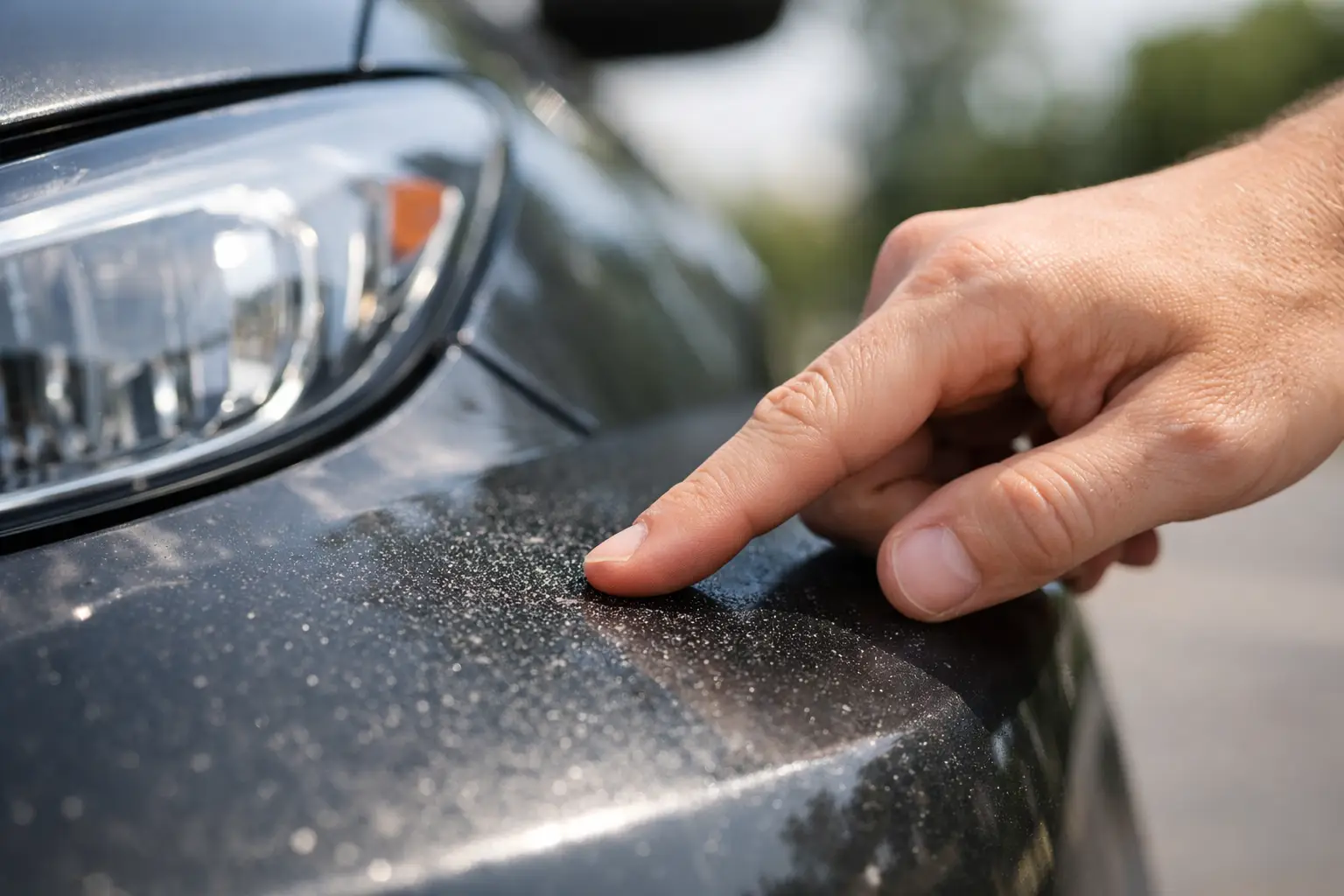
A freshly washed vehicle should feel slick when you glide your hand across the hood or door. If your paint feels rough even after a proper wash, the problem is usually not dirt left behind by the shampoo. It is often contamination that has bonded to the clear coat – and it can make an otherwise clean, glossy vehicle look less refined in direct sunlight.
For Chicago-area drivers, this is especially common after winter, highway commuting, construction-zone travel, or long stretches of outdoor parking. Road salt residue, brake dust, industrial fallout, tree sap, and paint overspray can all settle onto painted surfaces. Some contamination is visible. Much of it is not.
Why Car Paint Feels Rough After Washing
Your vehicle’s clear coat is smooth, but it is constantly exposed to airborne particles and environmental residue. Over time, these particles embed themselves into the surface. A normal wash removes loose grime, but it cannot always remove contaminants that have chemically or physically bonded to the paint.
The result is a finish that may look clean from several feet away but feels gritty, bumpy, or sandpaper-like when touched. On darker colors, bonded contamination can also reduce reflections and create a dull or hazy appearance.
The most common source is industrial fallout. Tiny metallic particles from brake dust, rail lines, construction activity, and general urban driving can land on the vehicle while hot, then begin to oxidize. This is why small orange or brown specks often appear around the lower doors, rear bumper, and wheel arches.
Road film is another frequent cause. Commuters in Arlington Heights, Schaumburg, Palatine, and surrounding suburbs encounter oil residue, salt brine, asphalt dust, and traffic pollution throughout the year. These contaminants can build up gradually, so the paint may feel rough before the owner notices a major change in gloss.
Tree sap, bug residue, bird droppings, and hard-water mineral deposits can also leave raised spots. These require a different approach than metallic fallout, which is one reason a quick wash is not always the right solution.
How to Tell Whether the Roughness Is Contamination
The simplest test is the clean plastic-bag test. After washing and drying the vehicle, place your hand inside a thin plastic sandwich bag and lightly glide your fingertips over the paint. The bag amplifies surface texture, making bonded contaminants easier to detect without pressing aggressively on the finish.
Check the hood, roof, trunk lid, and lower door panels. These areas tend to collect different types of contamination. A rough hood and roof may point to fallout or airborne pollution, while roughness behind the wheels is often tied to brake dust and road debris.
There is an important distinction here: not every imperfect-feeling surface is contamination. Scratches, oxidation, failing clear coat, and orange peel texture are different conditions. Orange peel, for example, is a wavy texture built into the paint finish. Clay treatment will not remove it. A professional inspection helps separate a removable surface issue from a paint-defect issue before any correction begins.
Why a Car Wash Alone May Not Fix It
A quality hand wash is essential, but its job is to safely remove loose dirt, dust, and traffic film. Scrubbing harder when paint feels rough is not the answer. More pressure, harsh brushes, or repeated passes through an automatic wash can add swirl marks while leaving bonded contamination in place.
Strong degreasers and household cleaners are not a good substitute either. They may strip waxes, dry trim, or affect the finish without addressing the actual source of the texture. The right method depends on what is on the vehicle.
Metallic fallout responds best to an iron-removal treatment. Mineral deposits may need a carefully selected water-spot remover. Sap and adhesive residue require safe solvent-based products. For widespread embedded contamination, a clay bar or synthetic clay media is often the next step.
The Safe Way to Remove Rough Paint Contamination
Professional decontamination is a controlled process, not just a clay bar rubbed across dry paint. The vehicle should first receive a thorough wash so loose debris does not get dragged across the clear coat. From there, the detailer evaluates the contamination and chooses the least aggressive effective method.
Chemical Decontamination
An iron remover is typically used when metallic particles are present. The product reacts with embedded ferrous contamination and helps release it from the finish. This step is particularly valuable after winter driving or when a vehicle has spent time near rail corridors, industrial areas, or busy expressways.
Chemical decontamination reduces the amount of mechanical work needed later. That matters because minimizing unnecessary contact with the clear coat helps preserve the finish.
Clay Bar Treatment
A clay bar treatment removes contaminants that washing and chemical decontamination cannot fully lift. Used with proper lubrication, clay glides across the surface and shears away bonded particles, leaving paint noticeably smoother.
Clay is effective, but it is not risk-free. Even fine-grade clay can create light marring, especially on soft black paint, neglected finishes, or vehicles treated without enough lubricant. That is why a premium service may follow decontamination with paint polishing to restore maximum gloss and clarity.
For a newer vehicle with minor contamination, a gentle clay treatment may be enough. For an older daily driver with swirl marks and a dull finish, pairing decontamination with paint correction often delivers a much more dramatic result.
Paint Polishing and Protection
Once the surface is clean and smooth, polishing can refine light marring, improve clarity, and bring back richer reflections. This is the stage where a detailer can address the difference between paint that is merely clean and paint that looks properly restored.
Protection should follow. A quality sealant, wax, or ceramic coating adds a protective barrier that helps reduce how strongly contamination adheres to the surface. Ceramic coating offers the longest-lasting option, with durable protection, easier maintenance, and improved resistance to environmental exposure.
A ceramic coating does not make a vehicle immune to fallout, water spots, or road grime. It does, however, make routine washing easier and gives contaminants less opportunity to bond aggressively when the vehicle is maintained correctly.
Should You Clay Your Car at Home?
It depends on the vehicle’s condition, paint color, and your experience. A well-lubricated fine clay treatment can be manageable for an owner who understands safe wash technique and is prepared to inspect the finish afterward. But the margin for error is smaller than many DIY videos suggest.
Avoid claying a dirty vehicle, using clay without sufficient lubricant, or reusing clay that has been dropped on the ground. A dropped clay bar can pick up grit that scratches paint immediately. Also avoid treating severe roughness with aggressive clay before identifying whether the issue is fallout, overspray, hardened sap, or damaged clear coat.
Paint overspray deserves particular caution. It can range from a light dusting to a significant coating across paint, glass, and trim. The removal method depends on the overspray type and how long it has cured. Improper removal can cause scratches or damage delicate trim pieces.
When the vehicle is a luxury model, an exotic finish, or simply an investment you want preserved, professional service is usually the more predictable choice. Elite Luxe Auto Detailing can assess the paint, remove bonded contamination safely, and recommend protection based on how the vehicle is driven and stored.
Preventing Rough Paint From Returning
No vehicle stays perfectly smooth forever when it is driven regularly, but regular maintenance slows buildup significantly. Wash the vehicle before contamination has months to cure into the finish, especially after winter storms, road construction exposure, or heavy pollen and sap seasons.
Parked outdoors? Inspect horizontal surfaces more often. Garage-kept vehicles still collect fallout and dust, but outdoor vehicles face more UV exposure, tree debris, bird droppings, and mineral-rich rainwater. A maintenance plan that includes careful hand washing and periodic decontamination protects both appearance and resale value.
The goal is not to chase perfection every week. It is to remove harmful buildup before it compromises gloss, makes washing harder, or creates a finish that no longer feels as polished as the rest of the vehicle. When clean paint feels smooth under your hand, the shine tends to look better from every angle.
