
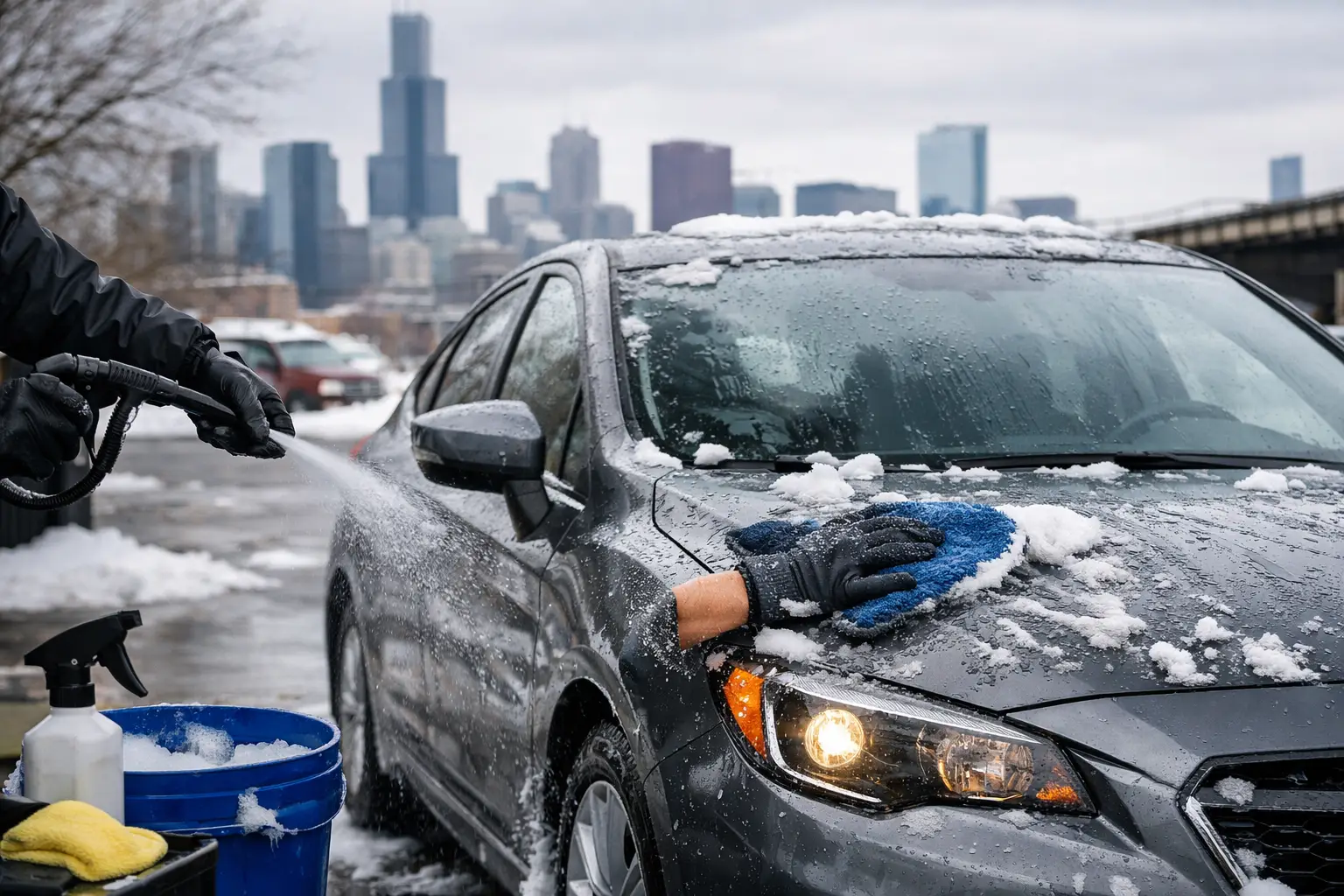
A Chicago-area commute can leave a clean vehicle looking neglected in a matter of days. Road salt clings to lower panels, gray slush dries into wheel wells, wet boots soak the carpets, and the windshield picks up a film that makes night driving harder than it should be. Winter detailing for commuter cars is not about keeping a vehicle spotless through every snowstorm. It is about preventing the kind of buildup that quietly damages materials and makes daily driving less comfortable.
For busy professionals, families, and anyone covering miles between Arlington Heights, Schaumburg, Palatine, and the city, winter is a season of maintenance. The right detailing plan protects the surfaces that take the hardest hit while keeping the car presentable, sanitary, and easier to clean between appointments.
Why winter commuting is hard on a vehicle
Salt is the obvious concern, but it is rarely just dry rock salt. Chicagoland roads are often treated with liquid brine, de-icing chemicals, sand, and road grime. This mixture is thrown into wheel wells, behind mud flaps, along rocker panels, around door jambs, and onto the lower sections of bumpers. If it remains there, moisture and contaminants can sit against vulnerable metal components and painted surfaces.
Modern vehicles have strong corrosion protection, but that does not make them immune to neglect. Chipped paint, exposed fasteners, underbody seams, brake components, and the edges of panels can all suffer when salt residue is allowed to accumulate for months. A quick drive-through wash may rinse visible dirt from the doors, but it often misses the areas where winter buildup does the most harm.
The interior has its own problems. Snow and slush carry salt directly onto floor mats and carpeting. Over time, the water leaves white crusty stains, stiffens carpet fibers, and can create a damp odor. Add coats, school bags, coffee, and closed windows, and a commuter cabin can feel worn well before spring arrives.
Winter detailing for commuter cars starts underneath
The most valuable part of a winter exterior service is a careful undercarriage and wheel-area rinse. This is where road treatment accumulates fastest and where a basic wash can fall short. The goal is to flush contaminants from wheel wells, suspension areas that can be safely accessed, rocker panels, and the lower body rather than simply making the paint look shiny for a day.
A professional winter wash should also include attention to door jambs, fuel doors, trunk channels, and the lower edges of doors. These areas trap moisture and grime, especially when snow melts in a heated garage. Cleaning them regularly helps prevent gritty buildup from rubbing against seals and painted surfaces.
Frequency depends on driving conditions. A vehicle used daily on treated roads may benefit from a thorough wash every two to three weeks during active winter weather. If there has been a heavy salting event or the car has spent days coated in gray road film, it is worth scheduling sooner. On the other hand, a garage-kept vehicle driven only occasionally may need less frequent service, though it should still be cleaned after exposure to brine.
Protect paint before winter grime bonds to it
Winter does not create every scratch or paint defect, but it makes an already vulnerable finish harder to maintain. Dirty snow, frozen grit, and improper scraping can mar paint. Repeated contact with contaminated wash mitts or brushes can add swirls, especially on black, dark blue, and other darker finishes that reveal every imperfection.
A quality paint protectant gives road grime less to cling to and makes routine washing more effective. For a commuter car, the right option depends on how long you plan to keep the vehicle, how it is stored, and the current condition of the paint.
A professional wax or sealant can provide seasonal gloss and water behavior at a lower initial cost. It is a practical choice for drivers who want a refreshed appearance and plan to maintain it regularly. A ceramic coating offers longer-term chemical resistance and easier cleaning when properly prepared and maintained. It does not make paint indestructible, and it will not prevent rock chips, but it can reduce the effort required to remove winter film while supporting a more consistently polished finish.
If the paint already has swirls, oxidation, or dullness, paint correction before applying protection can make a major visual difference. There is a trade-off: correction takes more time and investment than applying protection over untreated defects. For owners who value showroom-level results or are preparing a vehicle for long-term ownership, that extra preparation is often worthwhile.
Do not overlook glass, trim, and headlights
Clear visibility is a safety issue as well as an appearance issue. A clean windshield with a properly applied glass protectant helps water and slush shed more easily, though wipers still need to be in good condition. Dirty headlights can reduce usable light output, while oxidized lenses scatter light and make an otherwise well-maintained car look older.
Exterior trim also benefits from proper care. Harsh winter products and repeated washing can leave black plastic trim faded or streaky if it is treated with generic dressings. A professional detail uses appropriate products that restore a clean, even appearance without creating an oily finish that attracts more grime.
Keep slush from becoming an interior problem
The cabin is where commuters feel winter wear every day. All-weather mats are helpful, but they are not a complete solution. Saltwater can pool beneath a mat, run along the carpet edges, and collect under the pedals or front seats. Fabric mats absorb moisture even faster and require consistent cleaning before stains set in.
Regular vacuuming removes dry salt, sand, and grit that can grind into carpet fibers. More involved interior detailing addresses the residue left behind by wet boots, including salt extraction, shampooing or hot-water treatment when appropriate, and thorough drying. Drying matters. Cleaning a carpet without removing enough moisture can leave the cabin smelling musty, particularly when the vehicle stays closed overnight.
Leather and vinyl surfaces deserve attention too. Winter air is dry, but wet clothing and rapid temperature changes are hard on interior materials. Cleaning removes body oils, hand lotion, food residue, and grime from high-touch areas such as steering wheels, shifters, door pulls, and center consoles. Conditioning should be chosen carefully for the material. The goal is a clean, natural finish, not slippery leather or glossy dashboard surfaces that reflect in the windshield.
For families, a midwinter interior reset can be especially valuable. It removes the evidence of school drop-offs, sports practices, and weekend errands before salt stains and odors become harder to correct. For rideshare drivers and client-facing professionals, it also keeps the vehicle aligned with the impression they want to make.
A practical winter care routine between details
Professional service provides the deeper cleanup and protection, but a few habits make that work last longer. Keep a dedicated microfiber towel in the vehicle for wiping damp door sills before grime dries. Empty pooled water from all-weather mats rather than allowing it to slosh over the edges. If possible, avoid parking with packed snow sitting against the lower doors for extended periods.
Be selective about where you wash. Brushes at automatic washes can hold grit from previous vehicles, and that grit can add scratches to paint. Touchless washes are useful for a quick salt rinse when conditions are rough, but they should not replace periodic hand washing and detailed cleaning because they may not fully remove bonded traffic film or address interior contamination.
Avoid using household cleaners on dashboards, leather, or display screens. They can leave residue, dull finishes, or damage protective coatings. Likewise, do not apply tire shine immediately before driving through slush. A clean, properly dressed tire can look excellent, but excess product can sling onto freshly cleaned paint.
When to schedule winter service
The best time to protect a commuter car is before the season is at its worst, but it is never too late to improve its condition. An early-winter detail creates a cleaner baseline and adds protection before repeated road exposure. A midseason service removes accumulated salt and refreshes the interior when the vehicle is seeing the hardest use. A thorough spring detail is then the opportunity to decontaminate the paint, clean the undercarriage, correct winter wear, and prepare for warmer weather.
For drivers who want consistent care without fitting every appointment into an already full schedule, a maintenance program can be the more practical choice. Recurring service keeps winter buildup from reaching the point where restoration is needed, while preserving the gloss and comfort that made the vehicle feel new in the first place.
A commuter car does not need to look untouched by winter to be well cared for. It needs timely removal of salt, thoughtful protection, and an interior that still feels clean when the day starts before sunrise. That attention pays off every time you step into the driver’s seat, long before spring finally arrives.
