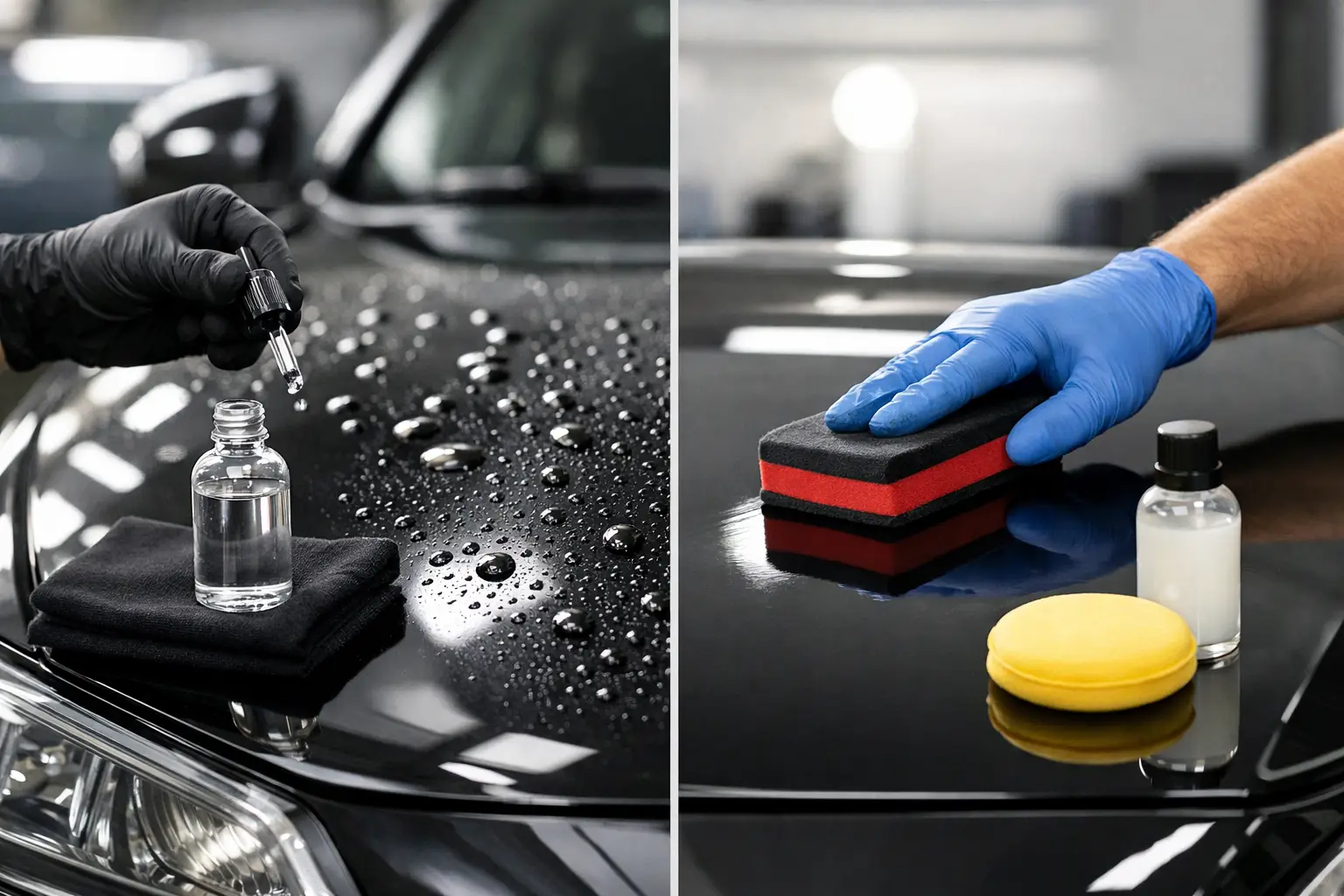
A freshly detailed vehicle can look exceptional under studio lighting, then face a very different reality on the road: sun, rain, road salt, bird droppings, construction dust, and repeated washes. The coating vs sealant decision comes down to how long you want protection to last, how much preparation your paint needs, and the level of care you expect from your vehicle.
Both options improve gloss, make washing easier, and add a sacrificial layer between your clear coat and everyday contamination. They are not interchangeable, however. A paint sealant is a practical, short-term protection option. A ceramic coating is a more involved, long-term investment designed for drivers who want lasting gloss and easier maintenance.
Coating vs Sealant: The Core Difference
A paint sealant is a synthetic protective product applied over clean paint. It bonds to the surface and creates a smooth, glossy finish that helps repel water, dirt, and light environmental contaminants. Most quality sealants protect for several months, although real-world lifespan depends heavily on where the vehicle is parked, how often it is washed, and the products used during maintenance.
A ceramic coating is a liquid polymer that chemically bonds with the vehicle’s clear coat. Once cured, it forms a durable protective layer with strong water behavior, chemical resistance, and a high-gloss finish. Professional-grade ceramic coatings can last for years when they are properly installed and maintained.
The difference is not simply that one product shines more than the other. Both can create impressive gloss on well-prepared paint. The larger difference is durability. A sealant is designed to wear away and be reapplied regularly. A ceramic coating is designed to remain in place for the long haul.
What a Paint Sealant Does Well
Paint sealant is a smart choice for many daily drivers. It provides visible improvement without the time, expense, or permanent commitment of a multi-year coating. On a vehicle that receives regular detailing or seasonal protection, a sealant can keep paint looking cleaner and more reflective through changing weather.
Because sealant application is generally faster, it works well for drivers who want a polished finish before winter, after a thorough exterior detail, or ahead of selling a vehicle. It can also be a good fit for leased vehicles, cars that are nearing replacement, or owners who prefer to refresh protection every few months.
Sealants offer useful defense against UV exposure, road grime, water spotting, and contamination, but they need realistic expectations. They do not stop rock chips, prevent door dings, or make a vehicle scratch-proof. Their protective film is thinner and less durable than a professionally applied ceramic coating, so it gradually breaks down with weather, washing, and exposure.
For the Chicago area, sealant can be especially useful as a seasonal service. Applied before harsh winter conditions, it helps reduce the amount of grime and salt that clings to the paint. It should still be followed by regular washing, particularly when roads have been treated.
Why Ceramic Coating Requires More Preparation
Ceramic coating delivers its best results only when the paint beneath it is properly prepared. This is where the process matters as much as the product. Coating over embedded contamination, oxidation, swirl marks, or water spots can preserve those defects beneath a durable layer.
A professional coating service typically begins with a detailed wash and decontamination process. The paint may then receive paint correction to reduce swirls, light scratches, haze, and other defects that limit clarity. After the surface is carefully cleaned and prepared, the coating is applied in controlled conditions and allowed to cure.
That preparation is why ceramic coating costs more than applying a sealant. You are not just paying for a bottle of product. You are investing in paint assessment, correction work, precise application, curing conditions, and the lasting performance of the protection system.
The payoff is substantial for the right owner. A coated vehicle stays easier to wash because dirt and water have less ability to cling to the surface. The finish retains a richer, more consistent gloss, and routine maintenance becomes less labor-intensive. For luxury, exotic, and well-kept daily vehicles, coating can help preserve the level of finish that makes the vehicle enjoyable to own.
Durability, Gloss, and Maintenance Compared
When comparing coating vs sealant, durability is the clearest dividing line. A sealant commonly lasts a few months to about a year in favorable conditions. A ceramic coating can provide protection for multiple years, depending on the coating system, paint condition, storage, driving habits, and maintenance.
Gloss is more nuanced. A properly corrected and sealed vehicle can look outstanding. A ceramic-coated vehicle can also look outstanding. Paint correction and surface preparation often make the most dramatic visual difference because they restore clarity to the clear coat. The coating then helps hold onto that corrected appearance longer.
Maintenance also matters. Ceramic coating does not eliminate the need to wash your car. In fact, neglect can still lead to water spots, mineral buildup, and contamination on a coated surface. What it does provide is a smoother, more resistant surface that releases dirt more easily during proper washing.
Sealant requires more frequent reapplication, but that is not automatically a disadvantage. An owner who enjoys routine detailing, keeps the vehicle garaged, and schedules seasonal maintenance may be perfectly satisfied with a quality sealant. The better option depends on how you use the vehicle and how long you intend to keep it.
Which Option Fits Your Vehicle?
Choose a paint sealant if you want reliable short-term protection, need a lower initial investment, or prefer to maintain your vehicle with recurring detail services. It is a practical way to add shine and protection to a commuter vehicle, family SUV, lease, or vehicle being prepared for resale.
Choose ceramic coating if you want multi-year durability, easier wash maintenance, long-lasting gloss, and a higher level of chemical and environmental resistance. It is often the stronger choice for newer vehicles, recently corrected paint, luxury vehicles, and owners who want to protect their investment from the beginning.
There is also a middle ground. Some owners start with a full detail and sealant, then move to ceramic coating after deciding they want a more permanent maintenance solution. Others coat a new vehicle early, before daily driving creates widespread swirls and contamination. Neither route is wrong. The right timing depends on your budget, vehicle condition, and ownership plans.
What Neither Product Can Do
Marketing around paint protection can create unrealistic expectations. Neither a sealant nor a ceramic coating replaces careful driving or routine maintenance. They will not prevent stone chips, deep scratches, collision damage, or clear-coat failure caused by age. For impact protection on high-risk areas, paint protection film is a different service designed for that purpose.
Ceramic coatings also do not remove defects. If your paint has visible swirls or oxidation, correction should happen before coating whenever possible. Applying protection over damaged paint may improve gloss somewhat, but it will not produce the crisp, showroom-level clarity that comes from restoring the surface first.
The most dependable results come from matching the protection to the vehicle rather than choosing based only on the longest advertised lifespan. A good installer will examine the paint, explain what preparation is needed, and recommend a realistic maintenance plan.
Protect the Finish You Want to Keep
Whether you select a sealant or ceramic coating, consistent care is what protects the result. Wash contamination away before it bonds, avoid abrasive automatic brushes, clean bird droppings and bug residue promptly, and use paint-safe products between professional services.
For drivers who want durable gloss without constant reapplication, a properly prepared ceramic coating is often the premium choice. For those who need flexible, effective protection with lower upfront cost, a quality sealant remains a valuable service. The best decision is the one that fits your vehicle, your driving conditions, and the standard you want your paint to maintain every time you walk up to it.
