
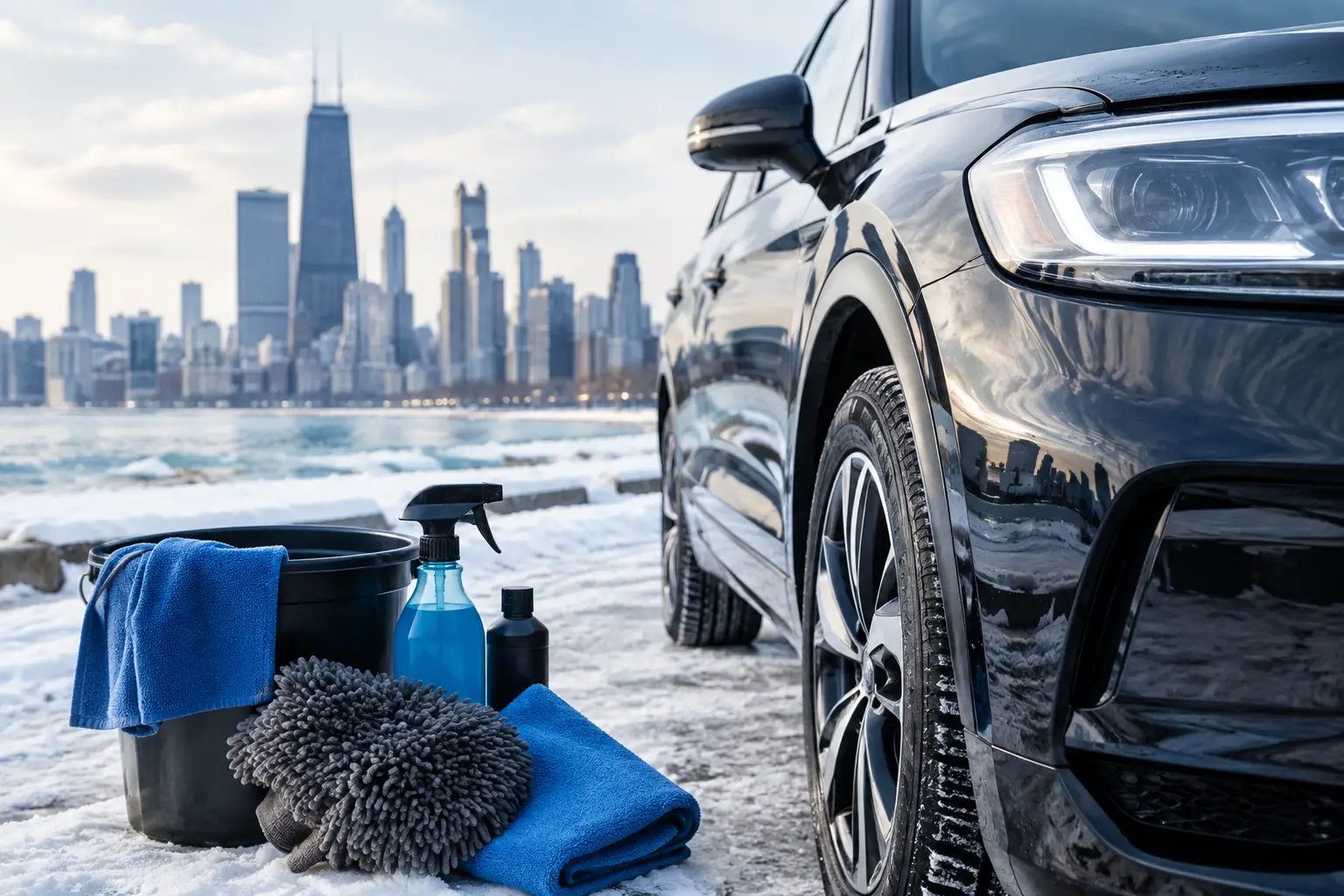
A Chicago winter can make a clean vehicle look neglected in a single commute. Salt brine, slush, wet boots, fogged glass, and freezing temperatures all work against your vehicle’s finish and interior. This winter car detailing checklist focuses on the areas that take the hardest hit, so your car stays cleaner, safer, and better protected through the season.
Winter detailing is not about chasing a perfect finish every day. It is about preventing the gradual damage that comes from leaving corrosive salt on paint, wheels, and underbody surfaces while moisture settles into carpets, seams, and trim. A consistent care routine protects both the appearance of your vehicle and its long-term value.
Start With a Safe Winter Wash
The most valuable winter detail is often the simplest one: removing road salt before it has time to linger. Salt and de-icing chemicals collect heavily behind wheels, along rocker panels, inside door jambs, beneath the rear bumper, and around the trunk area. These are easy places to overlook during a quick wash, but they are also common areas for staining, corrosion, and premature wear.
Wash the exterior whenever conditions allow, ideally after major snow events or several days of salty roads. If temperatures are near or below freezing, choose a facility with covered or heated wash options rather than spraying water outside and risking frozen door seals, locks, or trim.
A proper wash should begin with a thorough rinse to loosen abrasive grime. Avoid wiping dry salt directly across the paint with a towel or brush. Even fine salt residue can drag dirt across clear coat and leave visible scratching, especially on darker vehicles.
Pay close attention to these high-exposure areas:
- Wheel wells, suspension-facing surfaces, and lower bumper edges
- Rocker panels, mud flaps, and the lower portions of doors
- Wheels, brake calipers, and inner wheel barrels
- Door jambs, fuel doors, trunk seams, and hatch openings
- The undercarriage, when a wash facility offers an effective underbody rinse
An undercarriage rinse is helpful, but it is not a substitute for regular exterior washing. It reaches broad areas beneath the vehicle, while careful detailing addresses the seams and lower panels where grime visibly accumulates.
Protect Paint Before Salt Season Gets Serious
Clean paint is easier to maintain when it has a quality protective layer. Wax, paint sealant, and ceramic coating all help reduce how aggressively winter grime sticks to exterior surfaces. The right choice depends on the vehicle, how it is stored, and how often it is driven.
A traditional wax can improve gloss and add short-term water beading, but it may require reapplication during a long Midwest winter. A synthetic sealant generally lasts longer and is a sensible option for many daily drivers. Ceramic coating provides the strongest long-term protection and easier maintenance when it is properly applied to corrected, prepared paint. It does not make a vehicle immune to scratches, salt, or neglect, but it can make contamination easier to remove and preserve a cleaner finish between washes.
Do not overlook painted plastic trim, mirror housings, door handles, and rear bumper surfaces. These areas receive constant spray from passing traffic and can show staining quickly. A professional exterior detail before winter is especially worthwhile for vehicles with unprotected paint, embedded contamination, or visible swirl marks that become more noticeable under gray winter light.
Treat Chips and Scratches Promptly
Winter reveals every paint chip. Saltwater can settle into exposed areas and accelerate deterioration around the damage. Small chips may not require a full paint correction, but they should be cleaned and touched up before repeated exposure to road treatment chemicals.
Deep scratches, peeling clear coat, or rust-colored spots deserve a closer inspection. Detailing can improve and protect surrounding surfaces, but it cannot replace body repair when metal is already compromised.
Keep Wheels, Tires, and Glass Functional
Your wheels encounter the highest concentration of salt, brake dust, and slush. Clean them with a wheel-safe product and soft tools, particularly if they have a specialty finish, polished lips, or delicate coatings. Harsh acidic cleaners may work quickly, but they are not always appropriate for every wheel type and can create problems when used carelessly.
Tire dressing is optional in winter. A premium, water-based dressing can create a clean, finished appearance, but overly glossy products can sling onto lower paintwork and attract grime. For most winter-driven vehicles, clean tires with a natural satin finish are the more practical choice.
Glass care is also a safety issue. Clean the windshield inside and out, including the lower corners where wiper blades rest. Film on interior glass contributes to glare at night and makes defrosting feel less effective. Exterior glass protection can help water and slush clear more easily, though it will not replace good wiper blades or winter-rated washer fluid.
Check your wipers regularly. If they chatter, leave streaks, or show torn edges, replace them. A clean windshield paired with fresh blades makes a meaningful difference during dark, wet commutes.
Winter Car Detailing Checklist for the Interior
The interior carries a surprising amount of winter damage. Dirty snow melts off boots and saturates floor mats. Salt residue dries into white marks on carpet. Jackets, gloves, and damp gear raise humidity inside the cabin, which can lead to odors and stubborn window fog.
Start by removing everything from the floor areas and vacuuming thoroughly around pedals, seat tracks, and under the front seats. Then address any salt residue before it becomes embedded. Light residue may lift with a targeted interior cleaner and microfiber towel. Heavy staining often needs extraction or steam treatment to fully remove the mineral deposits without oversaturating the carpet.
Rubber all-weather mats are one of the best winter upgrades for a daily driver, but they still need maintenance. Remove them regularly, rinse away salt and grit, clean the raised channels, and let them dry before reinstalling. Leaving standing water below a mat can create moisture problems that are far more difficult to correct later.
For leather seating, use a gentle cleaner to remove denim transfer, road grime, and body oils. Follow with an appropriate protectant rather than a slippery, shiny dressing. Winter coats and dry indoor heat can make leather feel less flexible, so keeping it clean and conditioned helps preserve its appearance.
Control Moisture Before It Becomes an Odor
If the windows fog frequently or the cabin smells damp, do not mask it with fragrance. Find the moisture source first. Wet mats, a leaking door seal, snow-covered cargo items, or clogged drainage areas can all contribute.
Dry the vehicle as thoroughly as possible after a wet week. Remove soaked items from the trunk, lift mats to check the carpet beneath, and run the heat and air conditioning together when appropriate to help dehumidify the cabin. If odor persists, professional interior detailing and odor treatment can address contamination more effectively than an air freshener.
Do Not Forget Door Jambs, Seals, and the Engine Bay
Door jambs are small details with a big impact. They collect grime, and when moisture freezes, doors can stick or seals can become stressed. Wipe jambs clean after washes and dry the weatherstripping around doors, trunk openings, and hatches.
A rubber-safe protectant can help keep weatherstripping supple and reduce sticking. Use it sparingly and avoid products that leave an oily residue on painted surfaces. If a door is frozen shut, do not force it. Excess force can tear seals or damage handles.
Engine bay cleaning should be handled carefully in winter. Removing leaves, salt film, and grime from accessible areas can improve presentation and make leaks easier to spot. However, modern engine bays contain sensitive electronics and should not be aggressively pressure-washed. For luxury and performance vehicles in particular, a controlled professional cleaning process is the safer choice.
Set a Realistic Maintenance Rhythm
There is no single wash schedule that fits every Chicago-area driver. A garage-kept vehicle used a few times per week may only need attention after storms and longer trips. A daily commuter traveling on treated highways may need a rinse every one to two weeks, with more frequent spot cleaning around wheels and lower panels.
The key is to avoid waiting for spring. By then, months of salt residue, interior staining, and embedded grime can require more intensive correction. Regular maintenance is usually easier, less expensive, and more effective than trying to reverse an entire winter of neglect.
For owners who want showroom-level results without spending weekends managing salt, slush, and stained carpets, Elite Luxe Auto Detailing can provide professional seasonal protection and maintenance tailored to how the vehicle is actually used.
A winter-ready vehicle does not need to look untouched by the weather. It should look cared for, remain comfortable to drive, and enter spring with its paint, wheels, glass, and interior in far better condition than the roads tried to leave them.
