
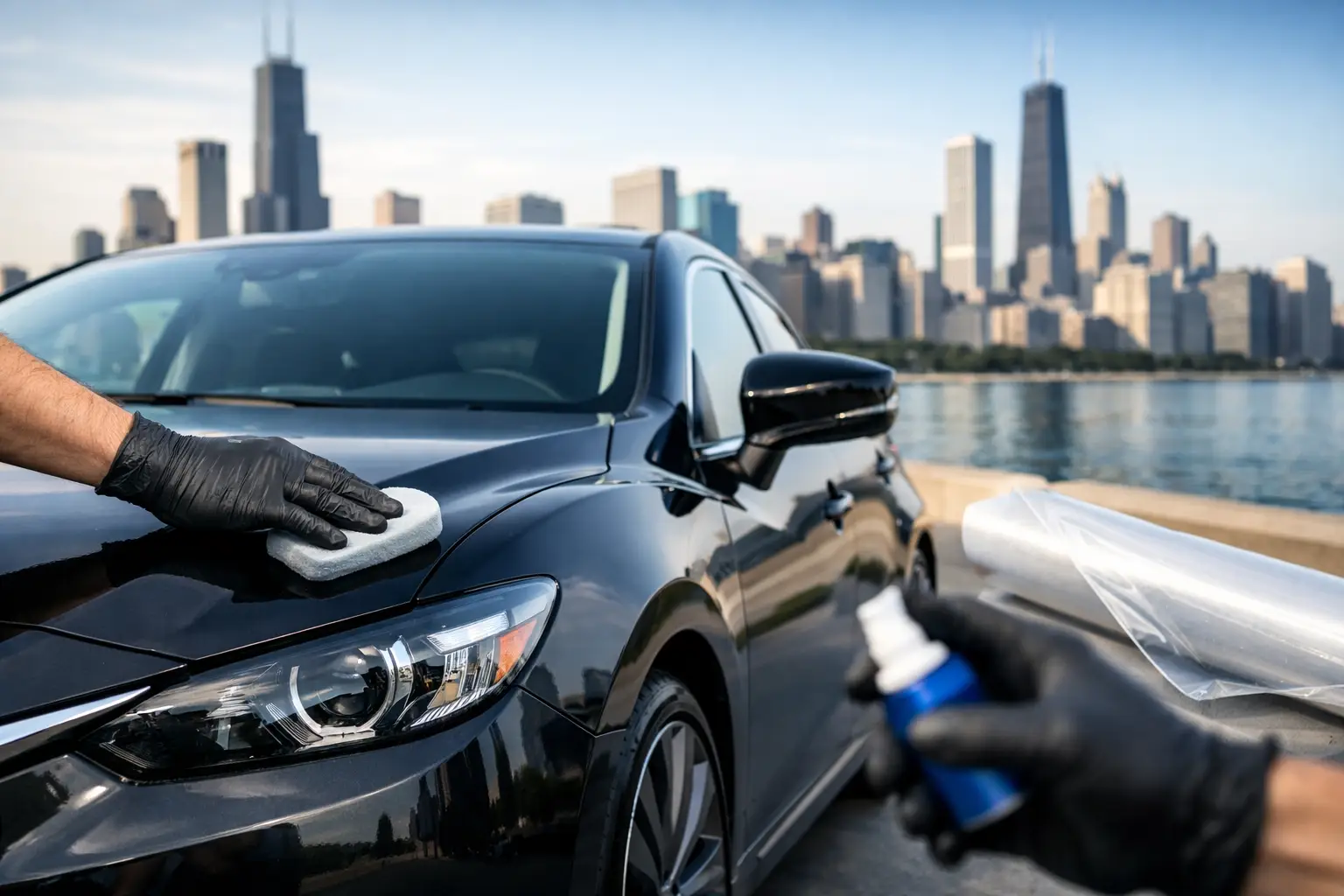
Chicago-area roads are hard on a vehicle’s finish. Road salt, construction dust, summer UV exposure, bird droppings, tree sap, and automatic car washes can slowly take a glossy paint job from sharp to tired. The best car paint protection options are not all built for the same job. The right choice depends on how you drive, where you park, how long you plan to keep the vehicle, and the level of finish you expect.
A daily-driven SUV that sees winter commuting needs a different strategy than a weekend sports car or a new luxury vehicle. Understanding what each protection option actually does helps you invest in results that last instead of paying repeatedly for short-term shine.
Best Car Paint Protection Options Compared
Paint protection generally falls into four categories: wax, paint sealant, ceramic coating, and paint protection film. Each can improve appearance and reduce contamination, but their durability, cost, maintenance needs, and impact resistance are very different.
Carnauba wax: warm shine with short-term protection
A quality carnauba wax can make paint look richer and deeper, especially on darker colors. It provides a slick feel, noticeable water beading, and a traditional freshly detailed appearance. For owners who enjoy frequent detailing or need a simple seasonal refresh, wax remains a valid choice.
Its limitation is durability. Wax gradually wears away through weather, washing, and regular exposure to contaminants. In a Chicagoland winter, it may need to be reapplied far more often than many drivers expect. It also does not prevent rock chips, resist scratches, or provide the chemical resistance of a ceramic coating.
Wax makes the most sense for well-maintained vehicles that receive regular professional care, or for owners who want an affordable gloss enhancement before a special event or sale.
Synthetic paint sealant: practical protection for daily drivers
Paint sealants are synthetic products designed to last longer than traditional wax. They usually create a bright, reflective finish and offer better resistance to moisture, road grime, and UV exposure. Depending on the product and maintenance routine, a professionally applied sealant may provide several months of protection.
For a commuter vehicle, sealant is often a sensible middle ground. It is more durable than wax, costs less than a ceramic coating, and can make routine washing easier. The trade-off is that it still requires periodic reapplication and will not shield the front bumper or hood from physical damage.
A sealant is a strong fit for drivers who want dependable seasonal protection without committing to a multi-year coating. It can also be useful as part of an ongoing vehicle maintenance program.
Ceramic coating: long-term gloss and easier maintenance
Ceramic coating is often the best value for owners who want long-lasting protection, strong gloss, and less effort during routine washes. Once applied to properly prepared paint, a professional-grade ceramic coating forms a durable protective layer that helps resist UV damage, oxidation, road film, bird droppings, tree sap, and many chemical contaminants.
The finish is highly hydrophobic, meaning water and grime release more easily when the vehicle is washed. That does not mean a ceramic-coated car never needs cleaning. It means dirt is less likely to bond tightly to the surface, making maintenance more manageable and helping the paint retain a cleaner, glossier appearance.
Ceramic coating is not a substitute for careful driving. It cannot stop a stone from chipping paint, and it is not scratch-proof. Improper washing, abrasive towels, and neglected contamination can still damage the finish. Its strength is in preserving the clarity and gloss of paint while reducing everyday environmental wear.
For new vehicles, ceramic coating protects the factory finish before it has time to dull. For used vehicles, paint correction before coating can remove or reduce swirl marks, light scratches, haze, and oxidation so the coating locks in a significantly improved finish. This preparation step matters. A coating enhances what is underneath it, including any existing defects that were not corrected.
Paint protection film: the choice for impact protection
Paint protection film, commonly called PPF or clear bra, is the best option when physical protection is the priority. This clear urethane film is installed over vulnerable painted panels and is designed to absorb the impact of road debris, small stones, and other hazards that can cause chips and scuffs.
High-impact areas such as the front bumper, hood, fenders, mirror caps, rocker panels, and door edges benefit most. Full-front coverage is popular with luxury and performance vehicle owners because it protects the areas that take the most abuse on highways. Full-body PPF provides the highest level of coverage for vehicles where preserving original paint is a major priority.
Quality film can also offer self-healing properties for fine surface marks when exposed to warmth. However, PPF is a premium investment and installation quality is critical. Proper panel preparation, clean edges, precise alignment, and correct finishing all affect how the film looks and performs over time.
PPF is especially worthwhile for low-clearance cars, vehicles with wide tires that throw road debris, and drivers who regularly travel expressways. It is also a practical choice for owners who want to preserve resale value by keeping original paint in exceptional condition.
Ceramic Coating vs. PPF: Which Protection Is Right?
Ceramic coating and paint protection film are often discussed as competing services, but they solve different problems. Ceramic coating is primarily chemical and environmental protection with major appearance and maintenance benefits. PPF is physical protection against rock chips, scuffs, and road debris.
For many high-value vehicles, the strongest approach is PPF on high-impact areas followed by ceramic coating over the rest of the exterior, and sometimes over the film itself. This combination provides chip defense where it matters most while delivering a consistent gloss and easier cleaning across the vehicle.
If your budget calls for one service, consider the vehicle’s actual use. A garage-kept sedan driven locally may benefit more from paint correction and ceramic coating. A new vehicle that spends time on I-90, I-290, or other busy routes may justify front-end PPF first. There is no one-size-fits-all answer, and a professional inspection should account for current paint condition as well as driving habits.
Paint Correction Comes Before Lasting Protection
The best protection product cannot repair neglected paint by itself. Swirl marks, water spots, oxidation, sanding marks, and fine scratches remain visible beneath wax, sealant, ceramic coating, or film unless they are addressed during paint correction.
Paint correction uses machine polishing and carefully selected compounds to level defects in the clear coat. The goal is not simply to make the vehicle look shiny under shop lighting. It is to restore depth, clarity, and reflection so the finish looks exceptional outdoors as well.
Not every vehicle needs an intensive multi-stage correction. A newer car may need only a light polish, while an older or improperly washed vehicle may require more extensive work. The right level of correction balances appearance goals with preserving as much healthy clear coat as possible.
How to Choose Based on Your Vehicle and Routine
Start with how long you expect to own the vehicle. If you lease or replace cars frequently, a sealant or entry-level ceramic protection may be enough to maintain a polished appearance. If you purchased a vehicle to keep for years, longer-term ceramic coating or targeted PPF can provide better value over time.
Next, consider parking and driving conditions. Outdoor parking increases UV, sap, pollen, and bird-dropping exposure. Frequent highway travel increases chip risk. Family vehicles may need extra protection around door edges, rear loading areas, and rocker panels. Dark-colored vehicles often benefit dramatically from paint correction and ceramic coating because they reveal swirl marks and dullness more easily.
Finally, be realistic about maintenance. Even premium protection requires proper washing. Use pH-balanced products, clean microfiber towels, and touchless or careful hand-wash methods whenever possible. Avoid brush tunnels that can introduce swirls, and remove bird droppings or tree sap promptly. A professional maintenance detail keeps the surface performing as intended and allows issues to be identified early.
For drivers in Arlington Heights and surrounding suburbs, the right protection plan should account for all four seasons, not just the vehicle’s first showroom-worthy week. Whether that means a seasonal sealant, a warranty-backed ceramic coating, or PPF on the panels that face the most road damage, the best choice is the one that protects the finish you have while fitting the way you actually use your car. A carefully prepared and professionally maintained vehicle will continue to look like an asset every time you walk up to it.
