
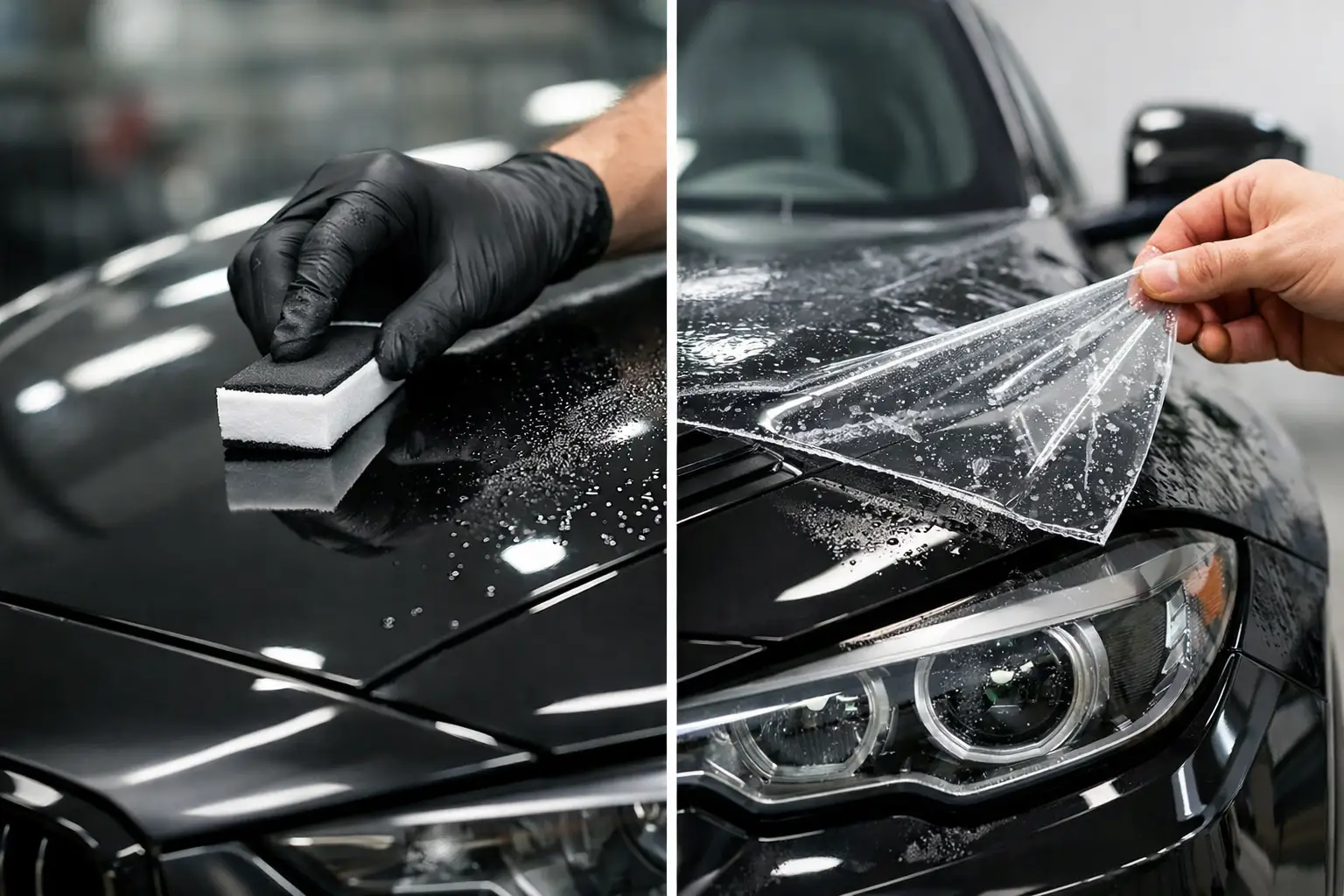
A freshly corrected vehicle can look flawless under studio lighting, then face road salt, gravel, bugs, parking lots, and harsh summer sun the moment it returns to daily driving. That is why ceramic coating vs paint protection film is not simply a question of which product is better. It is a question of what risks your vehicle actually faces, how you use it, and how much of the finish you want to preserve.
Both options can help keep a vehicle looking newer for longer. They do different jobs, however. Ceramic coating is built around gloss, chemical resistance, and easier maintenance. Paint protection film, often called PPF or clear bra, is designed to absorb physical impact before it reaches the paint. For many owners, the strongest result comes from using each material where it performs best.
Ceramic Coating vs Paint Protection Film: The Core Difference
Ceramic coating is a liquid protection product applied to properly prepared paint. Once cured, it forms a durable, hydrophobic layer that enhances gloss and makes water, dirt, road grime, and many contaminants less likely to bond to the surface. It does not make a vehicle maintenance-free, but it makes routine washing easier and helps maintain a clean, polished appearance between details.
Paint protection film is a clear urethane film installed over painted panels. Quality PPF is substantially thicker than a coating and provides a physical barrier against rock chips, minor abrasions, sand, road debris, and scuffs. Many premium films also have self-healing properties, allowing light surface marks to fade with heat from the sun or warm water.
Think of ceramic coating as a high-performance finish protector and PPF as impact protection. A coating improves the way the paint looks and cleans. Film is the better choice when the main concern is preventing the damage that occurs when something strikes the vehicle.
What Ceramic Coating Does Best
Ceramic coating is an excellent option for owners who want deep gloss, reduced wash effort, and dependable protection from the elements. After proper paint correction, a coating can make color appear richer and reflections sharper. On black, dark blue, red, and other high-maintenance colors, that clarity can be especially noticeable.
It also provides meaningful resistance to UV exposure, bird droppings, bug residue, tree sap, road film, and other contaminants that can dull or stain unprotected paint. Chicago-area drivers know that winter brings salt and slush, while warmer months bring construction dust, pollen, and insects. A properly maintained ceramic coating helps those contaminants release more easily during a safe wash.
The limitation is straightforward: ceramic coating is not a shield against impact. It can reduce light wash marring when the vehicle is cared for correctly, but it will not stop a stone chip on the expressway, a scrape from a shopping cart, or a door edge contact in a crowded lot. Claims that a coating prevents scratches or chips should be viewed carefully. It adds protection, not armor.
Ceramic coating is often the right fit for vehicles that are garaged, driven primarily around town, or already in excellent condition after paint correction. It is also a strong choice for owners who value a consistently clean appearance and are willing to follow proper maintenance practices.
Where Paint Protection Film Has the Advantage
Paint protection film earns its value at the front of a vehicle, where damage is most likely to happen. The front bumper, hood, fenders, mirror caps, rocker panels, and lower doors are exposed to debris thrown from other vehicles, loose gravel, salt, and road grit. On low-sitting performance cars and daily commuters with long highway mileage, these areas can accumulate chips surprisingly quickly.
Unlike a ceramic coating, PPF can absorb the energy of a small stone impact. It may still show damage under severe impact, but the film is there to take the hit first, potentially leaving the factory paint untouched beneath it. If a section is damaged, the film can be replaced without repainting the panel.
That matters for resale value and for owners who want to preserve original paint. Factory paint is difficult to replicate perfectly, even with high-quality bodywork. Keeping it intact is particularly valuable on luxury, exotic, and newer vehicles where finish condition has a direct effect on presentation and buyer confidence.
PPF is not limited to full-front coverage. Many vehicle owners choose targeted protection for the most vulnerable zones, such as the bumper, partial hood, mirror caps, door cups, and rear wheel arch areas. This can be a sensible middle ground when full coverage is not necessary.
Cost, Appearance, and Maintenance Trade-Offs
Paint protection film typically costs more than ceramic coating because the material is more expensive and installation requires greater precision. Panels must be thoroughly cleaned and prepared, film patterns must fit correctly, and edges need to be wrapped or finished carefully where appropriate. On a premium vehicle, a clean installation should look nearly invisible from normal viewing distance.
Ceramic coating can offer a more accessible way to protect an entire vehicle, but pricing depends on paint condition, correction needs, product type, and durability level. The prep work is not optional. Applying a coating over swirls, oxidation, or embedded contamination locks in an imperfect appearance rather than restoring it. The best results begin with a detailed inspection, decontamination, and paint correction when needed.
Both products still require care. PPF should be washed with safe methods and inspected periodically, especially around edges and high-impact zones. Ceramic-coated paint should also be washed regularly with coating-safe products. Automatic brushes, harsh chemicals, and neglected contamination can reduce the appearance and service life of either protection system.
One common misunderstanding is that ceramic coating makes PPF unnecessary. Another is that PPF makes ceramic coating unnecessary. Neither is completely true. Film handles impact better, but it can still benefit from a coating applied over it to improve water behavior, gloss, and cleaning. A coating alone protects every painted surface more affordably, but it cannot duplicate film’s chip resistance.
Which Protection Package Fits Your Vehicle?
The right choice depends on your vehicle, driving habits, and priorities. A newer daily driver that sees frequent highway travel may benefit most from front-end PPF, followed by ceramic coating on the remaining paint. This approach protects the areas that take the hardest abuse while keeping the entire vehicle easier to maintain.
For a weekend sports car, luxury SUV, or exotic vehicle, full-front or full-body PPF may make sense when preserving original paint is the priority. These vehicles often have complex body lines, expensive panels, low front ends, and finishes owners want to keep as close to flawless as possible. Ceramic coating can then be applied to the film and exposed surfaces for a uniform, high-gloss finish.
For a well-kept vehicle with lower highway exposure, ceramic coating may be the more practical investment. It provides strong visual improvement and long-term ease of care without the higher cost of extensive film coverage. It is also a smart choice after paint correction on a vehicle whose owner wants showroom-level results but does not need rock-chip defense on every panel.
Older vehicles require an honest assessment. If paint is failing, peeling, heavily chipped, or showing clear-coat damage, protection should not be applied until the underlying issue is addressed. Coating and film preserve surfaces. They do not repair failing paint.
Start With Paint Condition, Not the Product Name
The best protection plan starts with a close look at the vehicle in person. Paint color, mileage, road conditions, garage storage, wash habits, and the areas already showing chips all matter. A vehicle driven daily from Arlington Heights to Chicago has different exposure than one that leaves the garage only on clear weekends.
At Elite Luxe Auto Detailing, the goal is not to sell more coverage than a vehicle needs. It is to recommend protection that matches the finish, the budget, and the way the owner plans to enjoy the vehicle. Whether that means a gloss-focused ceramic coating, strategic PPF coverage, or both, proper preparation and professional installation are what make the investment look right from day one and continue paying off at every wash.
