
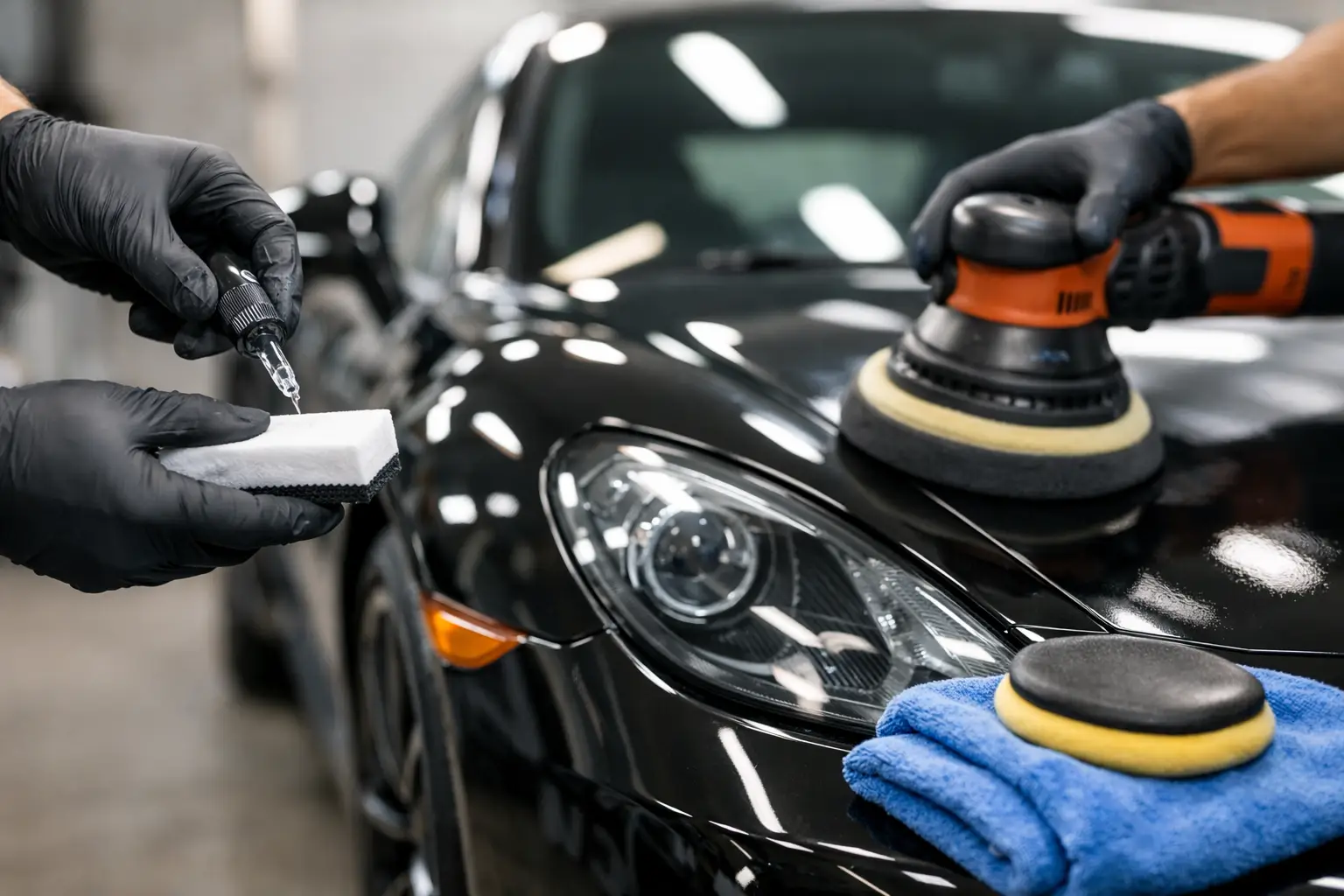
Road salt collecting behind wheel spokes. Brake dust bonding to the finish. Tree sap, pollen, bug residue, and Chicago-area weather all leave their mark long before a vehicle looks visibly dirty. A professional exterior detailing process is designed to do more than improve appearance for a day. It safely removes contamination, restores clarity where possible, and adds the protection your paint needs to hold its gloss over time.
For a daily driver, that may mean a thorough reset before seasonal weather changes. For a luxury, performance, or collector vehicle, it may mean careful paint correction and long-term ceramic protection. The right level of service depends on the paint’s condition, how the vehicle is stored, and how much maintenance the owner wants to handle afterward.
Why a Proper Exterior Detail Is Different From a Car Wash
A basic wash focuses on surface dirt. It can make a vehicle look better quickly, but it often leaves behind bonded contaminants, embedded brake dust, water spotting, and fine scratches that reduce paint clarity. Some fast wash methods can also create additional swirls through harsh brushes, dirty towels, or rushed drying.
Professional exterior detailing takes a controlled, paint-conscious approach. Each stage has a purpose: remove loose debris without scratching, dissolve the contaminants that normal soap cannot remove, evaluate the paint under proper lighting, and protect the finish once it is clean.
That order matters. Applying wax or ceramic protection over contamination does not solve the underlying issue. It can seal in roughness, reduce bonding, and limit the visual improvement a customer expects from a premium service.
The Exterior Detailing Process Step by Step
Initial inspection and paint assessment
The service begins with an inspection of the vehicle’s exterior. This includes the paint, wheels, wheel wells, tires, trim, glass, badges, door jambs, and vulnerable areas such as lower panels and rocker panels. The detailer looks for swirl marks, scratches, oxidation, water spots, tar, overspray, etched bug residue, and signs of previous paintwork.
This assessment determines what the vehicle actually needs. Not every vehicle needs paint correction, and not every scratch can be safely removed. A deeper scratch that catches a fingernail may require touch-up, wet sanding, or body shop repair rather than aggressive polishing. Clear expectations protect both the vehicle and the customer.
Wheel, tire, and wheel well cleaning
Wheels are typically addressed early because they carry some of the heaviest contamination on the vehicle. Brake dust contains metallic particles that can bond to wheel finishes if left in place. Tires and wheel wells also hold road film, mud, salt, and grime that can make an otherwise clean vehicle look unfinished.
Professional products and dedicated tools are used to clean these areas safely without transferring abrasive debris to the paint. The goal is not simply dark, shiny tires. It is clean rubber, properly treated wheel wells, and wheels that look refined without greasy sling on the body panels.
Pre-wash and safe hand wash
Before making direct contact with the paint, a quality exterior detailing process uses a pre-wash step to loosen heavy soil. Foam or specialized cleaners help break down road film and traffic grime so less dirt remains when the hand wash begins.
The vehicle is then washed with lubricating, pH-balanced products and clean wash media. Detailers work methodically from cleaner upper panels to dirtier lower areas, rinsing frequently to reduce the chance of dragging grit across the finish. This is one of the biggest differences between a careful detail and a quick wash.
Door jambs, fuel doors, emblems, grilles, and other tight areas are cleaned during this stage as needed. These details make a real difference when you open the door, step into the vehicle, or view it up close.
Chemical and mechanical decontamination
Even clean-looking paint can feel rough to the touch. That texture is often caused by embedded industrial fallout, rail dust, brake dust, tree sap, tar, or other bonded contamination. Regular washing will not remove all of it.
A professional may use an iron remover to dissolve embedded metallic particles, along with tar removal products where needed. After chemical decontamination, a clay bar or synthetic clay mitt may be used with proper lubrication to remove remaining bonded material.
This stage should be performed carefully. Clay is effective, but it can create light marring on softer paint if used improperly. That is why decontamination is often followed by polishing when a customer wants maximum clarity and gloss.
Paint correction when the finish needs it
Paint correction is the refinement stage. Using a machine polisher, appropriate pads, and carefully selected compounds or polishes, a detailer reduces the appearance of swirl marks, light scratches, haze, and oxidation. The result is deeper color, sharper reflections, and a cleaner-looking finish under direct sunlight.
Correction is not a one-size-fits-all service. A newer vehicle with minor wash marring may benefit from a single-step polish. A neglected vehicle may need a more involved multi-step correction. The more correction performed, the more time, skill, and paint measurement discipline are required.
There is also a trade-off worth understanding: polishing removes a very small amount of clear coat to level defects. It should be used thoughtfully, not repeated aggressively every year. Once the paint is in excellent condition, ongoing maintenance and protection are usually the smarter path.
Protection for gloss and durability
After the paint has been cleaned and, when needed, corrected, it is ready for protection. The best choice depends on the customer’s goals, budget, parking conditions, and maintenance routine.
A quality sealant or wax can provide noticeable gloss and short-term protection. It is a practical option for vehicles that receive regular maintenance and seasonal care. Ceramic coatings offer a more durable solution, with enhanced resistance to UV exposure, chemical staining, road grime, and routine wash wear. They can also make future cleaning easier because dirt is less likely to bond as strongly to the protected surface.
A coating is not a force field. It will not prevent rock chips, deep scratches, or collision damage. It still requires proper washing and periodic maintenance. When installed on properly prepared paint, however, a warranty-backed ceramic coating can be a valuable long-term investment for owners who want consistent gloss and easier upkeep.
Final details that complete the result
The finishing stage brings the exterior together. Exterior glass is cleaned for clear visibility, tires are dressed with an even satin finish, trim is restored or protected as appropriate, and the vehicle is carefully dried to prevent water from dripping out of mirrors, grilles, badges, and panel gaps after delivery.
A final inspection under proper lighting checks for missed residue, streaks, trapped moisture, and uneven protection. At Elite Luxe Auto Detailing, this attention to the final presentation is what helps turn a clean vehicle into a showroom-level result.
How Often Should You Detail the Exterior?
For most Chicagoland drivers, a professional exterior detail once or twice a year is a strong baseline, especially before winter and after the salt-heavy season. Vehicles parked outdoors, driven daily, or exposed to construction dust, tree sap, and frequent highway travel may benefit from more frequent maintenance.
A ceramic-coated vehicle still needs regular hand washing, but it may not need a full correction or major exterior reset as often. On the other hand, a vehicle with no protection can lose gloss faster and may require more intensive work to restore its finish.
The best maintenance plan is one that matches how you use the vehicle. A commuter SUV, a family vehicle, and a weekend sports car all face different conditions. Consistent care keeps small issues from becoming expensive restoration work later.
A polished exterior is satisfying, but the real value of professional detailing is preserving the finish beneath that shine. Treat your vehicle’s paint with the same care you expect from the vehicle itself, and it will continue to make the right impression every time you pull away.
