A bird dropping left on a freshly washed hood can do more than ruin the look of your vehicle. This guide to removing bird droppings explains how to clean the spot without grinding debris into the paint, what to do when the stain has already dried, and when the finish may need professional correction.
Bird droppings are not ordinary road grime. They often contain uric acid, organic matter, grit, and bits of seed or shell. Under direct sun, the contamination can dry quickly and become more concentrated against the clear coat. Heat speeds up the problem, which is why a vehicle parked outside during a Chicago-area summer afternoon can show staining sooner than a car kept in a garage.
Why bird droppings can damage automotive paint
Modern automotive paint has a clear coat designed to protect the color beneath it, but it is not invincible. When bird droppings sit on the surface, especially in heat, their acidic content and moisture can affect the upper layer of the clear coat. The result may be a dull spot, a visible outline, or an etched mark that remains after washing.
The risk depends on several factors: how long the dropping has been there, the temperature of the panel, the age and condition of the paint, and whether the vehicle has wax, sealant, paint protection film, or ceramic coating. A protected vehicle is easier to clean and has an added sacrificial barrier, but even ceramic-coated paint should not be left contaminated for days.
The biggest mistake is trying to wipe a dry dropping away with a paper towel, dry microfiber towel, or your hand. The hard particles can drag across the panel and leave fine scratches. On dark paint, those marks can be especially noticeable in sunlight.
What to use before you touch the paint
The safest cleanup starts with lubrication. Keep a small bird-dropping removal kit in the vehicle if you park outdoors regularly. It does not need to be complicated, but it should include products that let you lift the contamination rather than scrub it away.
Use a dedicated detail spray, rinseless wash solution mixed according to its directions, or a pH-neutral quick-cleaning product suitable for exterior paint. A clean, high-quality microfiber towel is essential. For dried spots, having a second microfiber towel or a soft disposable towel to lay over the area while it softens is helpful.
Avoid household glass cleaner, degreaser, dish soap, abrasive sponges, and rough napkins. These products may remove the visible mess, but they can strip existing protection, haze sensitive trim, or create unnecessary marring. A paper towel is acceptable only as a temporary cover to keep the area damp if nothing else is available – it should not be used to rub the paint clean.
Guide to removing bird droppings safely
Park in shade whenever possible and make sure the paint is cool to the touch. Cleaning a hot panel can cause the product to evaporate too quickly, leaving less lubrication and making the spot harder to remove.
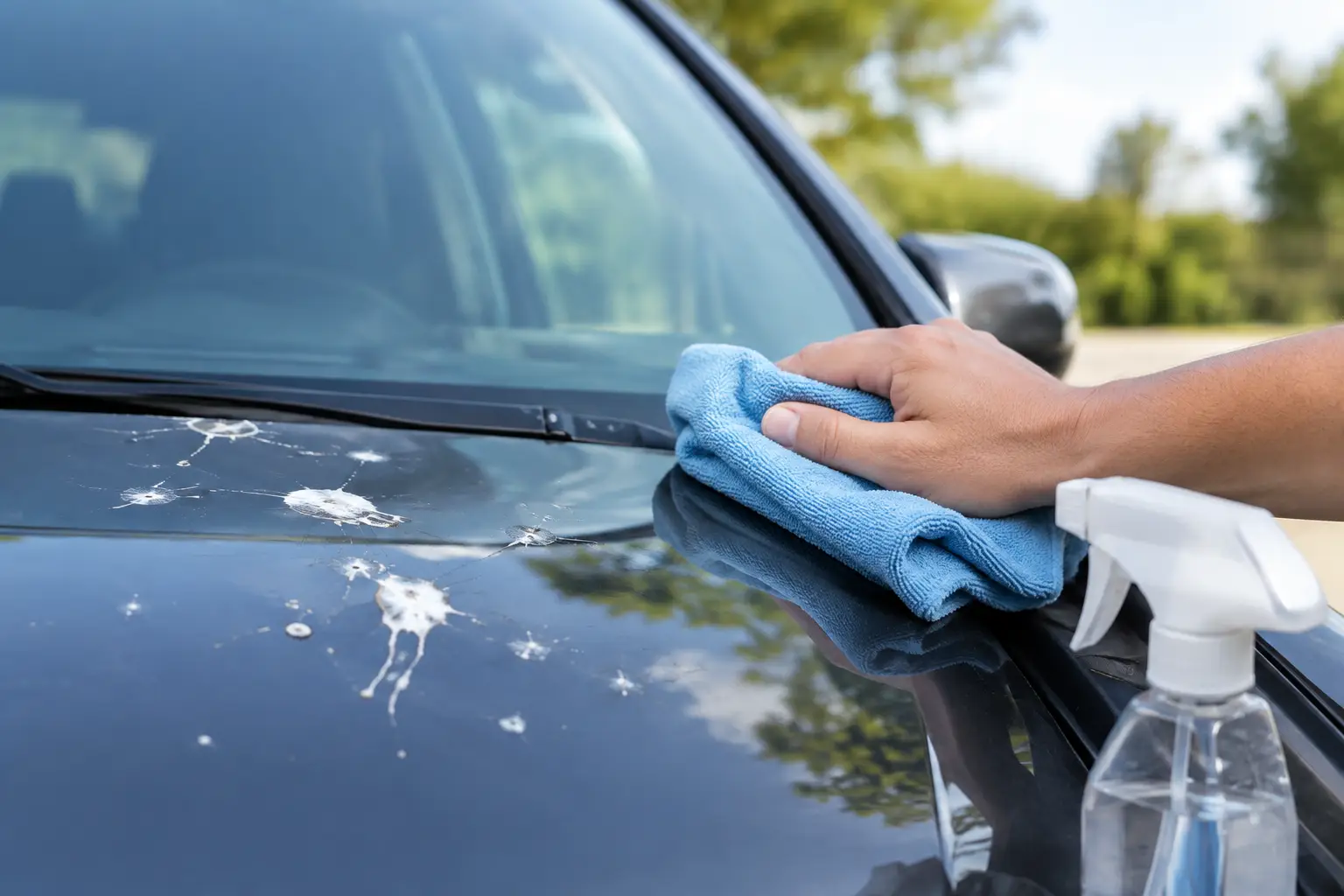
First, generously spray the dropping and the surrounding area. Let the cleaner dwell for a minute or two. If the material is fresh, it may release easily. If it is dry or baked on, place a soaked microfiber towel over it and allow the moisture to soften it for several minutes. Do not press down or scrub while it is still hard.
Once the contamination has softened, gently lift it away with one side of a clean microfiber towel. Use light pressure and a single-direction motion rather than circular rubbing. Fold the towel to a fresh section as debris transfers to it. If residue remains, spray again and repeat the process instead of increasing pressure.
After the spot is clean, wipe the area lightly with a separate clean microfiber towel. Inspect it from different angles. A clean surface can still show a faint ring or dull patch if the clear coat has been etched, so look in natural daylight or under a bright inspection light rather than assuming the problem is gone because the debris is gone.
If you are at home, a proper hand wash afterward is worthwhile, particularly if there are multiple droppings or overspray-like residue around the affected panel. This removes any remaining film and gives you a clearer view of the paint condition.
If the dropping has dried or baked onto the surface
Dried droppings require patience, not force. Start with more product and longer dwell time. A warm, damp microfiber towel placed over the area can help break down the residue, but the towel should be damp, not dripping across seams or into delicate areas.
For severe buildup, repeat the soak-and-lift process several times. It can feel slower than scrubbing, but it is far less expensive than correcting a cluster of scratches afterward. Never use a razor blade, fingernail, credit card, plastic scraper, or stiff brush on painted panels.
Be extra cautious around matte paint, satin paint, vinyl wraps, paint protection film, unpainted plastic trim, and polished metal. These surfaces can react differently to cleaners and cannot always be polished back to an even appearance. If the vehicle has a specialty finish or expensive film, use a product approved for that surface and test an inconspicuous area when there is any uncertainty.
How to tell whether you are seeing etching
After cleaning, bird-dropping damage generally falls into one of three categories. The best-case outcome is no remaining mark at all. In other cases, there may be a faint stain or residue that disappears with a thorough wash and a light finishing polish.
More serious etching looks like a defined outline, a dull crater-like area, or a mark that becomes obvious when light reflects across the panel. The clear coat may have been affected below the surface, meaning a simple wash or spray wax will not remove it. Attempting aggressive DIY polishing without the right tools, pad, polish, and paint knowledge can create uneven gloss or remove more clear coat than necessary.
A professional paint assessment is the smarter choice when the spot remains visible after proper cleaning, when the vehicle is black or another dark color, or when the affected panel is part of a luxury or enthusiast vehicle where paint clarity matters. Targeted paint correction can often improve or remove light etching while preserving the integrity of the finish. Deeper etching may be reduced significantly, though results depend on how far the damage has progressed.
Protecting your paint after cleanup
Once the area is clean, restore protection if needed. A quality wax, synthetic sealant, or ceramic coating creates a slicker, easier-to-maintain surface and reduces how strongly contamination bonds to the paint. It does not make a vehicle immune to bird droppings, but it buys valuable time and makes safe removal easier.
Ceramic coatings are especially useful for drivers who park outside, commute daily, or want a lower-maintenance gloss. The coating acts as a durable sacrificial layer between contaminants and the clear coat. Still, regular maintenance matters. A coating performs best when contaminants are removed promptly and the vehicle is washed with paint-safe methods.
Paint protection film offers another level of defense on high-impact areas, but it also needs quick cleanup. Leaving acidic contamination on film can affect its top layer over time, even if the paint beneath remains protected.
A practical habit that prevents expensive paint damage
The most effective strategy is simple: remove bird droppings as soon as you notice them. Keep detail spray and clean microfiber towels in the trunk, garage, or center console. If you cannot clean the spot immediately, move the vehicle out of direct sunlight if possible and avoid touching the contamination until you have enough lubrication to remove it correctly.
For vehicles that receive regular professional maintenance, mention any recent bird-dropping incidents during your next service. A trained detailer can inspect the panel under proper lighting, address minor etching early, and refresh the paint protection before a small mark becomes a permanent distraction. Elite Luxe Auto Detailing helps Chicagoland owners maintain that showroom-level finish with careful cleaning, paint correction, and long-term protection suited to how their vehicles are actually used.
Your paint does not need a harsh response to a messy problem. A gentle, well-lubricated cleanup done quickly is usually the difference between a temporary inconvenience and a repair that stays visible every time the sun hits the hood.
