
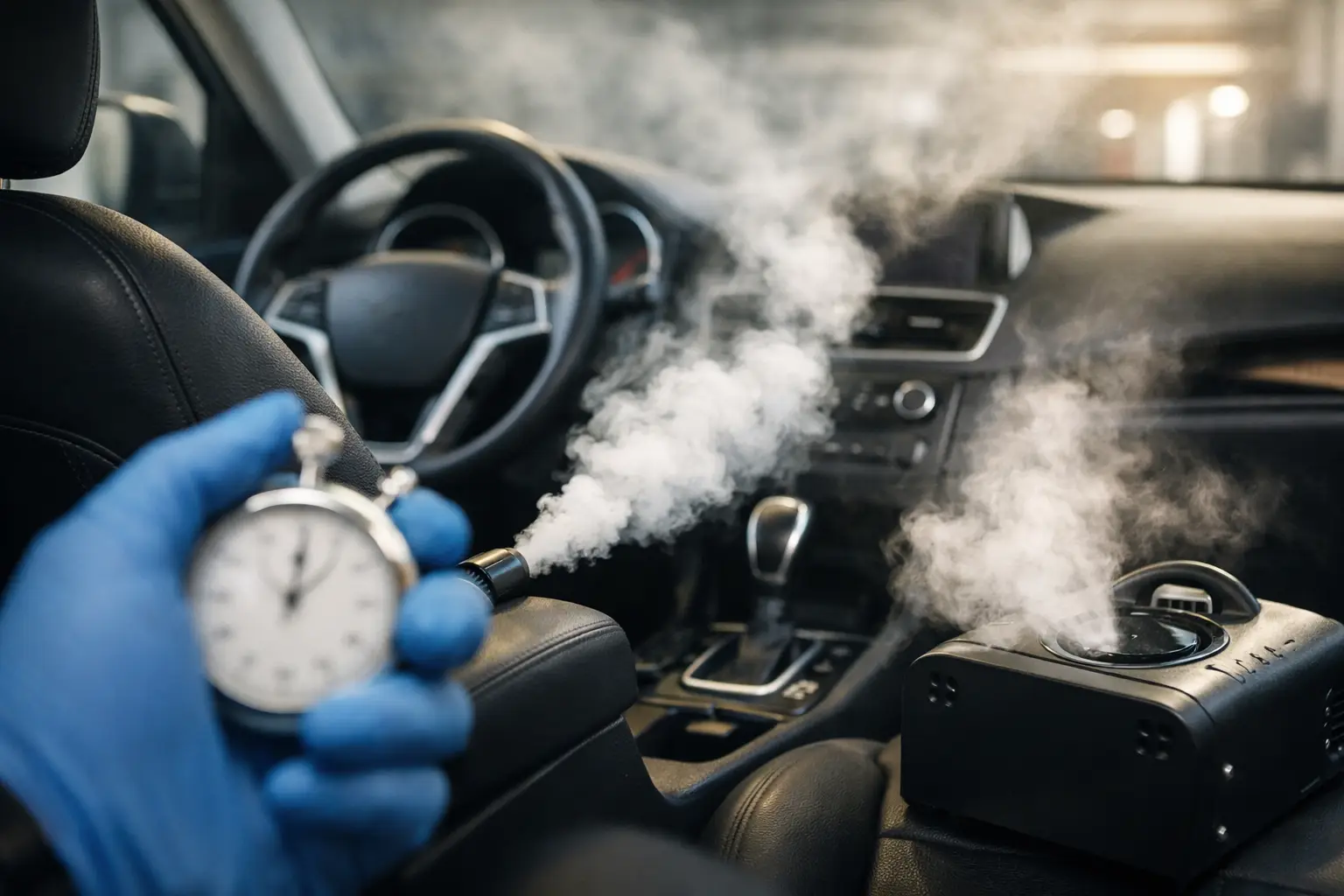
A smoke smell can make an otherwise clean vehicle feel permanently worn out. It settles into fabric, foam, carpeting, the headliner, and the heating and air-conditioning system – places a quick wipe-down cannot reach. So, how long does smoke odor removal take? For a lightly affected vehicle, treatment may take several hours. For a vehicle exposed to regular smoking over months or years, complete odor removal can take a full day or longer, sometimes with more than one treatment.
The timeline matters, but the standard matters more. A strong fragrance can temporarily cover smoke, yet the odor often returns on a humid day or when the cabin warms up. Proper removal means addressing the odor source throughout the interior, not simply making the car smell different when it leaves the shop.
How Long Does Smoke Odor Removal Take for Most Cars?
Most professional smoke odor removal appointments take between four and eight hours. That range generally applies when the interior is in reasonable condition and the smoke exposure is moderate. The vehicle needs a detailed interior cleaning, targeted treatment of porous materials, and enough time for odor-neutralizing products and equipment to work.
A lightly affected car, such as one smoked in occasionally with the windows open, may be treated in three to five hours. The process can be more involved when smoke has been present daily, when ash is embedded in carpets and seat tracks, or when the previous owner used air fresheners to conceal the problem.
Heavily contaminated vehicles can require a full-day service or a staged approach. In extreme cases, the technician may recommend returning the vehicle after the first treatment to confirm the odor has not resurfaced. That is not a shortcut or a failure – it is the right way to verify a lasting result when odor molecules have penetrated deeply into interior materials.
What Determines the Smoke Odor Removal Timeline?
The biggest factor is the type and length of smoke exposure. Cigarette and cigar smoke leave behind sticky residue, often called smoke film, that clings to nearly every interior surface. Marijuana smoke may be less visibly staining in some vehicles, but its odor can still saturate fabrics and ventilation components. Fire or electrical smoke is a different category entirely and may require specialized restoration beyond standard auto detailing.
The interior materials also make a difference. Leather and hard trim can be thoroughly cleaned, although smoke film can build up in seams, switches, and textured surfaces. Cloth seats, carpet, seat foam, and a fabric headliner are more absorbent. Once smoke reaches the foam beneath a seat cover or the padding under carpet, treatment takes longer because the source is no longer just on the surface.
Vehicle size affects labor time as well. A two-door coupe has less interior volume than a three-row SUV, but condition still outweighs size. A well-maintained SUV with occasional smoke exposure can be simpler to treat than a compact sedan that was smoked in every day for years.
Humidity and temperature can also reveal hidden odor. Smoke residue often becomes more noticeable after the vehicle has been closed in the sun. A reputable detailer considers this when evaluating results, rather than judging the cabin only when it is cool and ventilated.
Why a Quick Odor Bomb Is Rarely Enough
Many drivers try an over-the-counter fogger, aerosol spray, or hanging air freshener before scheduling professional service. These products may reduce the smell for a few days, especially in a lightly affected vehicle. They do not remove the residue that created the odor in the first place.
Smoke is not one isolated scent trapped in the air. It is a collection of particles and oils deposited on glass, plastics, upholstery, carpeting, and inside the climate-control system. If those surfaces are not cleaned first, an ozone or odor-neutralizing treatment is working around the contamination instead of after it has been removed.
This is why a proper service begins with deep cleaning. Interior glass, trim, cup holders, door panels, seat surfaces, carpet, floor mats, and the trunk area all need attention. Ash and residue can collect under seats, in seat rails, around console edges, and in areas an owner may never see. Those details are often the difference between a vehicle that smells fresh briefly and one that stays fresh.
The Professional Smoke Odor Removal Process
Professional results come from a sequence of steps, not one machine or one chemical. First, the interior is inspected to determine the severity of the odor and locate obvious contamination. Visible ash, debris, and loose particles are removed before deep cleaning begins.
Next, hard surfaces are cleaned to lift smoke film without damaging delicate trim, leather finishes, screens, or interior coatings. Upholstery, carpet, and mats receive the appropriate deep-cleaning method based on their material and condition. Fabric treatment may include hot-water extraction, enzyme-based cleaning, or low-moisture methods when needed. The goal is to remove residue while allowing the vehicle to dry properly.
The cabin air filter should also be inspected. A dirty filter can retain odor and redistribute it when the fan runs. When smoke odor is noticeable through the vents, the HVAC system may need targeted treatment as part of the service. Without this step, the cabin can smell clean until the air conditioning or heat is turned on.
Only after cleaning is complete does odor neutralization have its best chance of success. Depending on the vehicle and contamination level, this may involve ozone treatment or another professional-grade odor treatment. These methods require proper handling and dwell time. They are not substitutes for cleaning, and they should not be rushed.
Finally, the interior is aired out, checked again, and evaluated under realistic conditions. For high-end interiors in particular, the process must balance thorough odor removal with careful treatment of leather, Alcantara, wood trim, and other sensitive materials.
When Smoke Odor Removal Can Take More Than One Visit
A second appointment may be recommended when the car has a long smoking history, damp carpeting, water intrusion, or strong odors inside seat foam or the headliner. A vehicle that was smoked in daily with windows closed is much more likely to need additional work than one exposed occasionally.
There are practical limits to any service. If the odor source is tied to damaged foam, burned material, or severe contamination from a fire, replacing a cabin air filter, carpet padding, headliner, or seat foam may be more effective than repeating treatments indefinitely. An honest assessment should explain that trade-off before work begins.
Buyers of used cars should be especially careful. A dealer lot scent or a freshly detailed interior can hide smoke odor temporarily. Test the HVAC system, smell the trunk, check around the headliner and visors, and sit in the closed vehicle for several minutes. These areas often reveal whether smoke contamination was fully addressed or merely covered up.
How to Help the Results Last
After smoke odor removal, the simplest protection is keeping smoke out of the cabin entirely. Even occasional smoking can restart the buildup process, particularly in cold Chicago-area weather when windows stay closed and the heater runs.
Replace the cabin air filter on schedule, clean spills quickly, and avoid relying on heavily scented products to mask interior smells. If the vehicle carries pets, sports gear, or damp floor mats, regular interior maintenance helps prevent new odors from mixing with any remaining trace of smoke. A clean, dry cabin is easier to keep fresh and more enjoyable to drive.
For vehicles being prepared for sale, smoke odor removal is also a practical investment. Buyers notice cabin odor immediately, and a clean interior supports the impression that the vehicle has been cared for. Elite Luxe Auto Detailing approaches odor service with the same focus used for appearance restoration: careful preparation, material-appropriate methods, and results that hold up beyond the first impression.
The right question is not only how many hours the appointment takes. It is whether the odor source has been removed thoroughly enough that you can close the door, turn on the air, and enjoy your vehicle without being reminded of it.
