
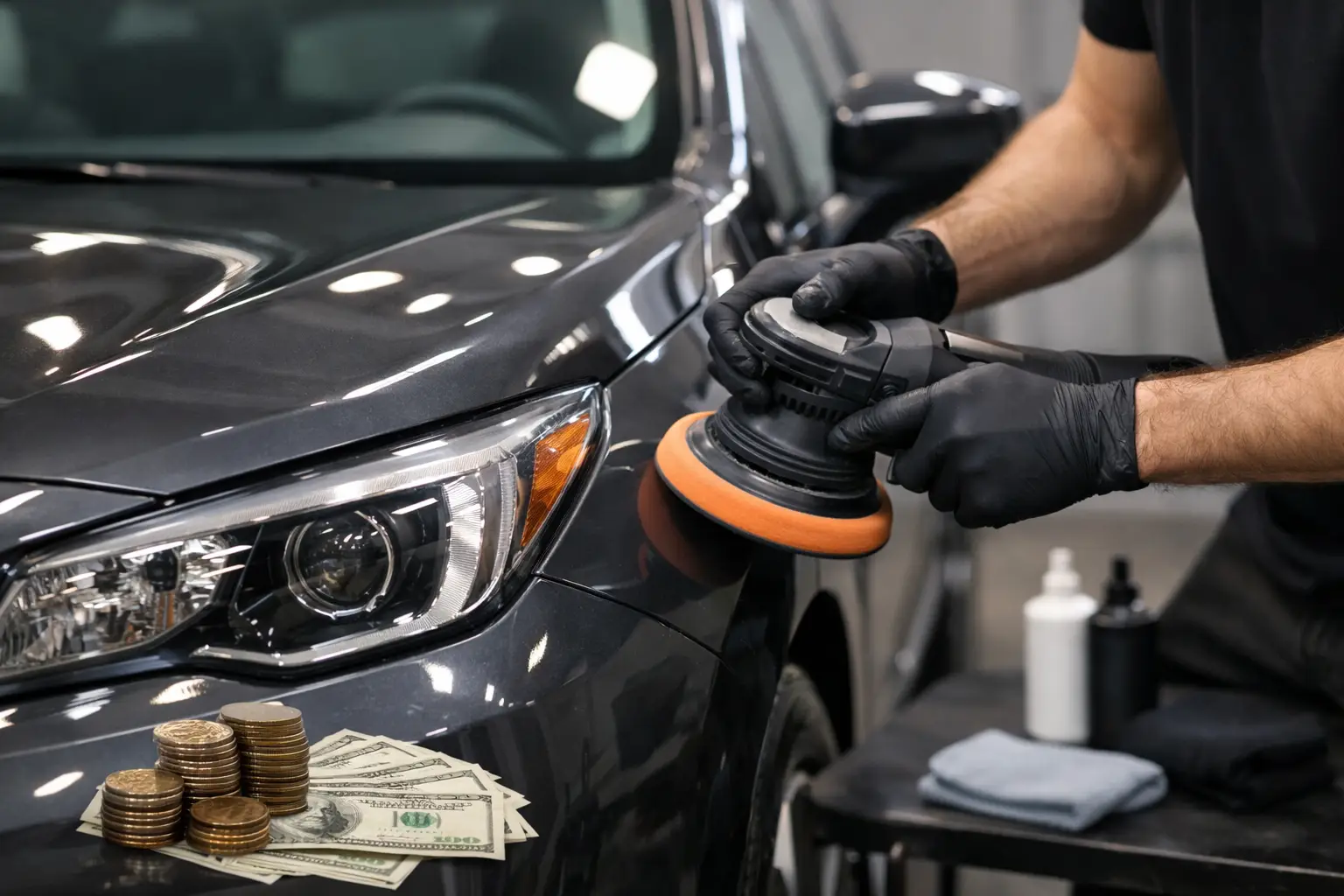
A black car under parking lot lights tells the truth fast. What looked glossy in the driveway suddenly shows swirl marks, haze, light scratches, and dull patches that regular washing will not fix. If you are asking how much does it cost to get paint correction, the real answer depends on how much damage is in the paint, how far you want the finish restored, and how precise the work needs to be.
Paint correction is not the same as a wax, polish, or quick buff. It is a machine polishing process designed to remove or significantly reduce defects in the clear coat. The goal is better clarity, deeper gloss, and a cleaner reflection. On some vehicles, that means refining light wash marring. On others, it means a much more involved process to correct years of improper washing, oxidation, water spot etching, and moderate scratching.
How much does it cost to get paint correction on average?
For most vehicles, paint correction typically falls somewhere between a few hundred dollars and several thousand. A light one-step correction on a smaller daily driver may start around $400 to $700. A more involved two-step correction often lands closer to $800 to $1,500 or more. On larger vehicles, heavily neglected paint, or luxury and exotic finishes that require extra care, pricing can move well beyond that.
That range is wide because paint correction is labor-driven. You are paying for time, experience, inspection, testing, and controlled polishing, not just products. Two cars that look similar from ten feet away can require very different amounts of work once the paint is properly inspected under direct lighting.
What affects how much it costs to get paint correction?
The biggest factor is the current condition of the paint. Light swirl marks from automatic car washes are one thing. Deep scratches, oxidation, heavy water spots, sanding marks, or paint transfer are another. The worse the defects, the more time it takes to safely improve the finish.
Vehicle size also matters. A compact sedan simply has less painted surface than a full-size SUV, truck, or three-row family vehicle. More panel area means more polishing time, more edge work, and more careful inspection.
Paint type plays a role too. Some paints are softer and correct relatively quickly, while others are extremely hard and need more aggressive combinations and more passes to achieve strong results. Certain luxury vehicles also have more delicate trim, tighter body lines, and panel shapes that slow the process down.
Then there is the level of correction you want. Not every customer needs a near-perfect finish. Some want a strong visual improvement for a leased vehicle, resale prep, or seasonal refresh. Others want the highest possible gloss and defect removal before a ceramic coating is installed. That choice changes both time and price.
One-step vs two-step paint correction
A one-step correction is usually the best value for many drivers. It combines defect removal and gloss enhancement in a single polishing stage. This option often removes a meaningful percentage of swirl marks and light imperfections while noticeably improving depth and shine. If your vehicle is a daily driver and you want it to look dramatically better without chasing every last flaw, this is often the practical choice.
A two-step correction is more intensive. The first step is designed to cut through more noticeable defects. The second step refines the finish to increase clarity and gloss. This process usually delivers a stronger transformation, especially on darker colors where swirls and haze are easier to see. It also requires more labor, more pad and polish changes, and more testing, which is why the price jumps.
In premium detailing, this is where craftsmanship shows. Anyone can promise shine. True correction means balancing improvement with paint safety and knowing when to stop before overworking the clear coat.
Why cheap paint correction often costs more later
Low-priced correction services can be tempting, especially when pricing online looks dramatically lower than a professional studio quote. The issue is that paint correction done poorly can create its own problems. Holograms, buffer trails, uneven polishing, stained trim, or excessive clear coat removal are all risks when the work is rushed.
A proper correction starts with decontamination and inspection. The paint needs to be clean enough for accurate evaluation. The technician should test a section, measure improvement, and choose the least aggressive method that produces the right result. That process takes time, and time is the most expensive part of quality correction.
If a service seems priced like a basic wash and wax but promises major defect removal, the math usually does not add up. Either expectations are being set too high, or the process is being rushed.
Paint correction pricing by vehicle condition
If your car is in relatively good shape and only has light wash marring, you are likely in the entry-level correction range. That usually means a one-step service with a noticeable gloss boost and moderate defect removal.
If the paint has years of swirl marks, deeper scratches, heavy water spotting, or oxidation, expect pricing to move into the mid to upper range. More aggressive correction requires slower work, more section passes, and sometimes multiple polishing combinations across different panels.
If the vehicle is black, dark blue, or another color that shows every defect, the standard often rises. Dark paint does not just reveal damage more clearly. It also reveals finishing quality more clearly. Achieving a crisp, refined finish on dark paint is where detailers earn their reputation.
Is paint correction worth the cost?
For many vehicle owners, yes. It can completely change how a car looks without repainting it. A well-corrected finish has better gloss, better reflection, and a cleaner, more premium appearance. If you care about presentation, resale value, or simply enjoying how your vehicle looks every day, the difference is easy to appreciate.
It is especially worthwhile before applying ceramic coating. A coating locks in the condition underneath it. If the paint still has swirls and haze, the coating will protect that flawed finish. If the paint is corrected first, the coating preserves a much sharper result.
That said, paint correction is not always about chasing perfection. On an older commuter vehicle, a one-step improvement may make more financial sense than a multi-stage correction. On a weekend car, luxury SUV, or exotic vehicle, investing more in the finish can be fully justified.
How to know what level of correction you need
The right approach starts with an honest inspection. Good lighting matters. So does seeing the vehicle after a proper wash and decontamination. Paint can hide a lot under dust, road film, or temporary fillers.
Most owners fall into one of three groups. They either want the car to look much better for daily use, they want a premium finish before coating, or they want the highest possible level of defect removal. Those are very different goals, and your quote should reflect that.
A trustworthy detailer will explain what is realistic. Not every scratch will come out safely. Some defects are too deep to remove fully without compromising clear coat thickness. Professional correction is about improvement with judgment, not reckless polishing.
How much does it cost to get paint correction with ceramic coating?
When paint correction is paired with ceramic coating, the total investment increases, but so does the long-term value. Correction restores the finish. Coating helps protect it from UV exposure, road grime, chemical contamination, and easier-to-create wash damage moving forward.
In many cases, combining the services makes sense because the vehicle is already being thoroughly prepped. If you are investing in correction for appearance, adding durable protection can help preserve that result longer and reduce how quickly the paint falls back into a dull, swirled condition.
For drivers around Arlington Heights and nearby suburbs who plan to keep their vehicles, this combination often gives the strongest return. It is not the cheapest route upfront, but it is often the smarter one if your goal is lasting gloss and easier maintenance.
What to ask before approving a quote
Before you move forward, ask what level of defect removal is expected, whether the service is one-step or multi-step, and how the paint will be protected afterward. You should also ask whether the quote is based on vehicle size alone or on actual paint condition.
That conversation tells you a lot. A quality shop will speak clearly about process, limitations, and outcomes. They will not promise a perfect finish on every vehicle, and they will not treat all paint correction jobs as if they are identical.
At a premium level, pricing should feel tied to the result, the labor involved, and the care taken with your vehicle. That is the difference between cosmetic shine and true finish restoration.
If your paint has lost its clarity, the best next step is not guessing from generic price ranges. It is getting the vehicle inspected by a professional who can tell you what the paint needs, what result is realistic, and what level of correction makes sense for how you drive and what you expect from the finish.
