
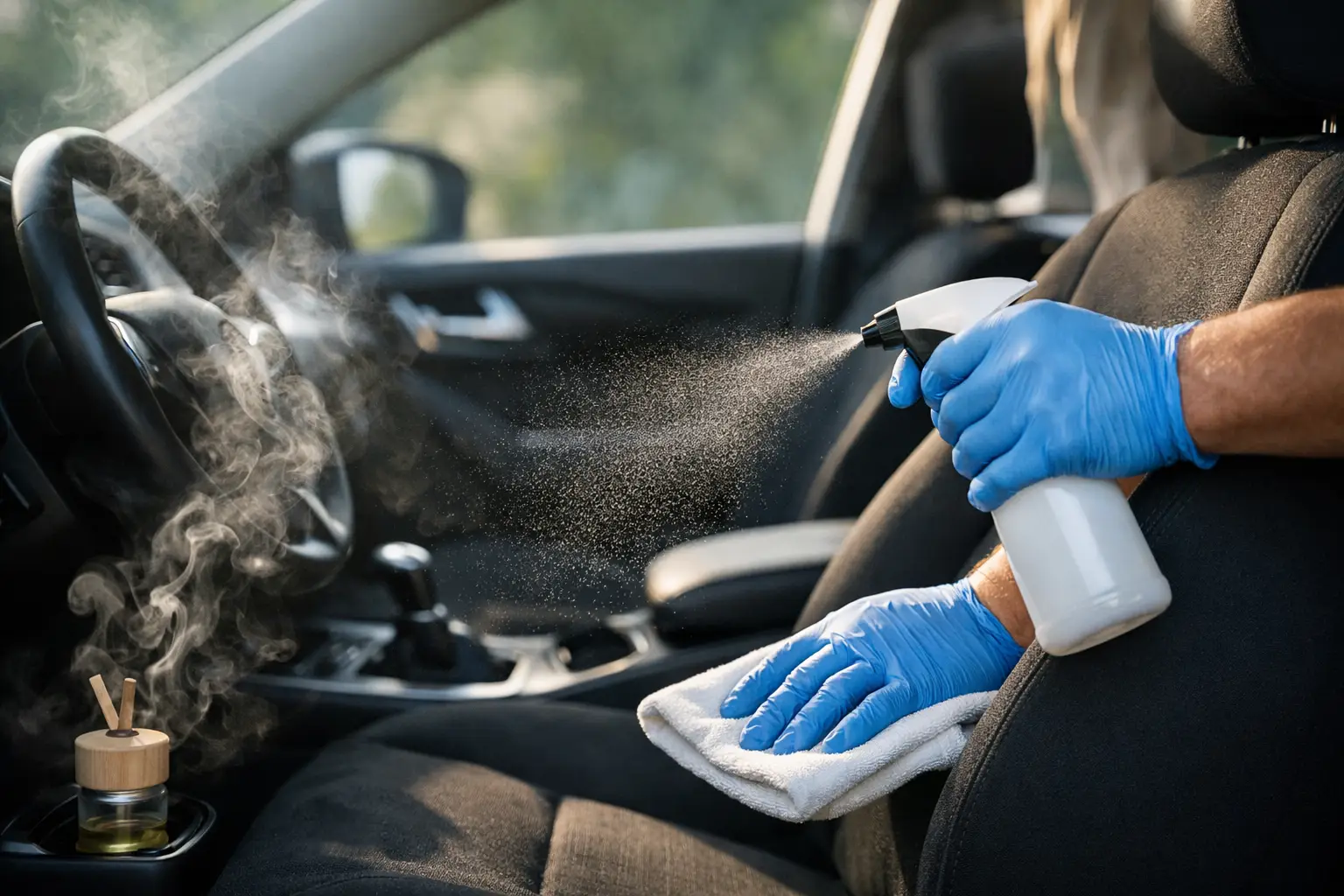
Smoke odor can make an otherwise clean vehicle feel neglected, and it can affect comfort, resale appeal, and a buyer’s first impression. Knowing how to remove smoke odor from a car means doing more than spraying an air freshener. Smoke leaves behind residue in fabric, leather, plastics, the headliner, and the HVAC system, so the odor must be removed at its source rather than covered up.
Why Smoke Odor Is So Difficult to Remove
Cigarette and cigar smoke contain oily particles, ash, tar, and odor-producing compounds that settle into nearly every interior surface. Cloth seats and carpets absorb them deeply, while vinyl, leather, glass, and trim hold a thin film that continues to release odor over time. If smoking occurred regularly in the vehicle, the contamination may also be inside the cabin air filter and ventilation ducts.
That is why a quick vacuum, a scented vent clip, or an open window rarely solves the problem. Those measures can make the car smell better for a day or two, but heat, humidity, and a closed cabin often bring the odor right back. A thorough result requires cleaning, extraction, and odor neutralization in the right order.
The source matters, too. Tobacco smoke generally leaves a sticky residue that needs stronger surface cleaning. Wildfire smoke can settle as fine particulate dust, while an electrical burning smell may point to a mechanical or wiring issue that should be inspected before any detailing work begins.
How to Remove Smoke Odor From Your Car
The most effective process starts with dry debris removal and ends with the air system. Skipping the early cleaning steps makes odor treatments less effective because they are being asked to work around residue that is still present.
Remove Ash, Trash, and Loose Contamination
Start by emptying the entire cabin. Check door pockets, seat tracks, center consoles, cup holders, cargo areas, and beneath the seats for cigarette butts, ash, burned matches, or old packaging. Even one forgotten ashtray insert can continue to contaminate the interior.
Vacuum the seats, carpet, floor mats, trunk, seams, and crevices carefully. Use a crevice tool around seat rails and console edges, where ash often settles. For a vehicle with heavy smoke exposure, a high-quality vacuum with strong filtration is preferable so fine particles are removed rather than recirculated.
Clean Every Hard Surface, Including Glass
Smoke residue is not always visible, but it is often easy to feel. Dashboards, door panels, steering wheels, trim, visors, switches, and interior glass can develop a slightly tacky or hazy film. Clean these surfaces with an interior-safe cleaner appropriate for the material, using microfiber towels and soft brushes for seams and textured plastics.
Do not overlook the headliner. It is one of the most odor-prone areas in a smoker’s car, yet it is also delicate. Use minimal moisture and light pressure. Aggressive scrubbing or soaking can loosen the adhesive behind the fabric and cause sagging, especially in older vehicles.
Interior glass deserves special attention because smoke film tends to build up on the windshield and side windows. A streak-free glass cleaning process improves visibility and removes another layer of lingering residue from the cabin.
Deep Clean Fabric, Carpet, and Upholstery
Fabric seats, carpet, and floor mats usually hold the strongest odor. Shampooing or hot-water extraction can be highly effective when performed correctly because it flushes contaminants out of the fibers instead of simply wetting the surface.
The trade-off is drying time. Oversaturating carpet or upholstery can create a damp smell, encourage mildew, or leave water trapped beneath the carpet padding. Use controlled moisture, extract thoroughly, and allow proper airflow until the interior is completely dry. In Chicagoland’s humid summer weather or cold winter conditions, professional drying equipment can make a meaningful difference.
Leather should not be treated like cloth. It needs a leather-safe cleaner followed by conditioning when appropriate. Harsh degreasers can strip protective coatings, leave a dull finish, or dry out the material. For luxury interiors with delicate leather, Alcantara, or specialty trim, product selection and technique matter as much as the cleaning itself.
Replace the Cabin Air Filter and Treat the HVAC System
If the odor becomes stronger when the fan turns on, the HVAC system is part of the problem. Replace the cabin air filter, especially if it is old or visibly dirty. A smoke-contaminated filter can keep reintroducing odor even after the cabin has been cleaned.
The vents and evaporator area may also need an HVAC odor treatment. This targets odor-producing buildup in the ventilation system and helps prevent the smell from returning when the heat or air conditioning runs. Simply spraying fragrance into the vents is not the same thing. Fragrance may temporarily mask the odor, but it does not remove the contamination.
Use an Odor Neutralizer After Cleaning
Once the surfaces and fabrics are clean, use a true odor neutralizer designed for automotive interiors. These treatments work by bonding with or altering odor-causing compounds, rather than layering perfume over them. The vehicle should then be closed for the recommended dwell time and aired out afterward.
Ozone treatment can be useful for severe, embedded smoke odor when performed by a trained professional after the interior has been thoroughly cleaned. It is not a shortcut for a dirty interior, and it should never be run with people or pets inside the vehicle. Overuse or improper application can be hard on certain materials, so it is best reserved for situations where conventional cleaning and neutralization are not enough.
What Usually Does Not Work
Air fresheners, baking soda left in a cup holder, and fragrance bombs can improve the initial smell without delivering lasting results. They can also create an unpleasant mix of perfume and stale smoke, which is especially noticeable to passengers and potential buyers.
Steam cleaning alone has limits as well. Steam can help sanitize select hard surfaces and loosen residue, but it must be used carefully around electronics, delicate headliners, leather, and adhesives. It also does not replace proper extraction on deeply contaminated carpet and upholstery.
A single treatment is sometimes enough for light, occasional smoke exposure. For a vehicle that was smoked in daily over several years, expect a more involved restoration. The condition of the cabin, the type of materials, and whether the HVAC system is affected all influence the final result.
When Professional Smoke Odor Removal Is Worth It
Professional odor removal is usually the better choice when the smell returns after basic cleaning, when smoke is visible on glass and trim, or when the vehicle is being prepared for sale, lease return, or a new family member. The value is not only in the products used. It is in the complete process: inspecting the cabin, cleaning material-specific surfaces safely, extracting fabric, servicing odor-prone areas, and verifying that the HVAC system is no longer carrying the smell.
For premium, luxury, and exotic vehicles, professional care also reduces the risk of damage from overly aggressive chemicals or excess moisture. A detailer should treat a leather-trimmed sedan, a family SUV with cloth seating, and a performance car with Alcantara differently. The goal is a clean, neutral interior without compromising the materials that make the vehicle feel special.
Elite Luxe Auto Detailing approaches smoke odor removal as an interior restoration service, not a cover-up. For drivers in Arlington Heights and surrounding suburbs, that means a process built around cleanliness, material safety, and a cabin that feels comfortable to spend time in again.
Keep the Odor From Returning
After the odor has been removed, prevention is straightforward: avoid smoking inside the vehicle, empty trash promptly, replace the cabin air filter on schedule, and maintain the interior before residue has time to build up. If a passenger smokes occasionally, addressing ash and wipe-down cleaning immediately is far easier than reversing months of embedded odor.
A clean car should smell neutral, not heavily fragranced. When the doors open, the best result is an interior that feels cared for, comfortable, and ready for every commute, client meeting, or weekend drive.
