
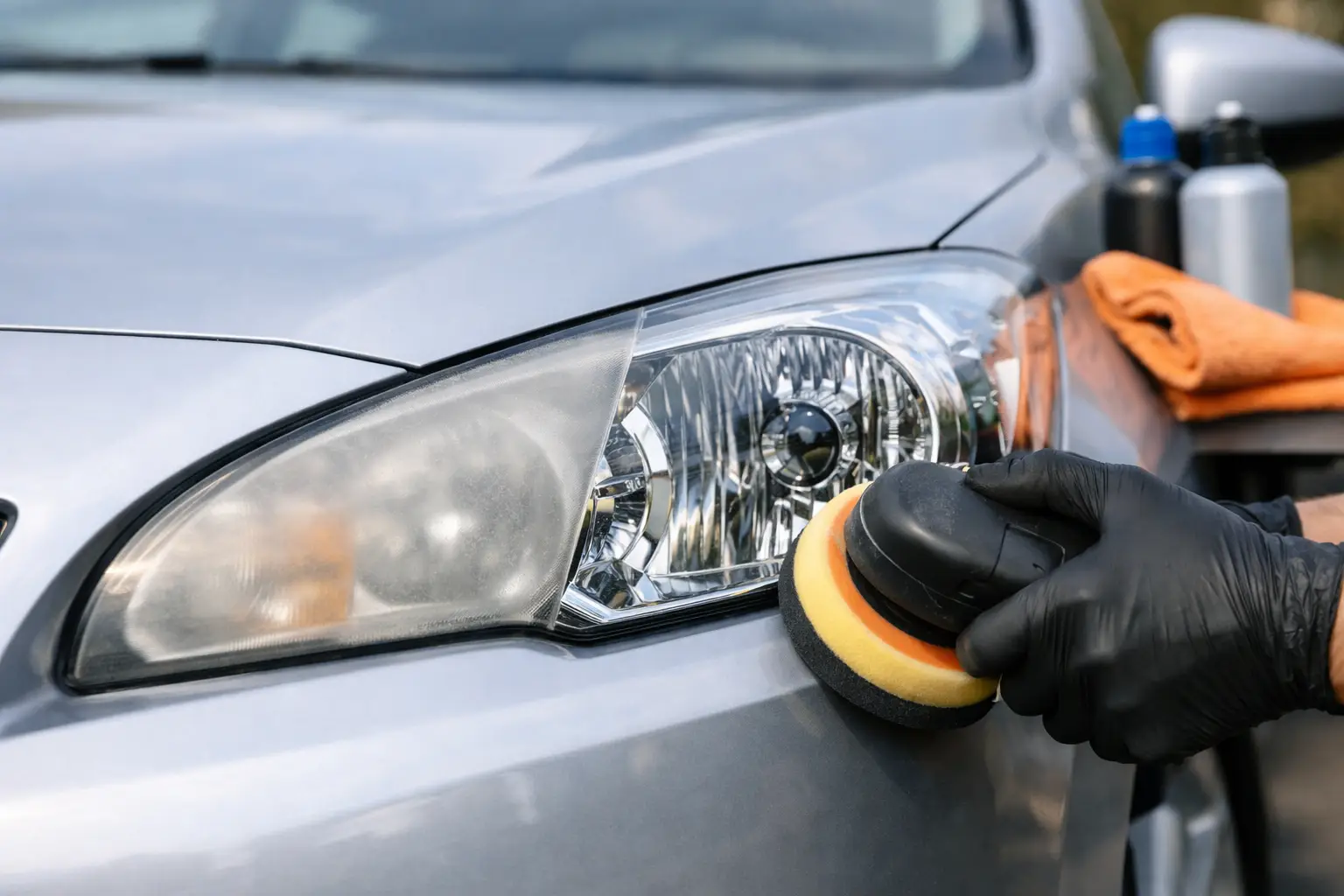
That hazy film on your headlights is not just an appearance issue. If you are searching for how to restore cloudy headlights, you are usually dealing with reduced nighttime visibility, an older-looking front end, and a problem that tends to get worse fast once oxidation sets in.
On many vehicles, the headlight lens is made from polycarbonate plastic, not glass. It is durable, but it is also vulnerable to UV damage, road grime, chemicals, and years of weather exposure. As the factory protective coating breaks down, the surface starts to oxidize. That is what creates the cloudy, yellowed, or chalky look you see from the outside.
The good news is that most headlights can be restored. The catch is that not every cloudy headlight needs the same fix, and not every DIY method gives lasting results.
How to Restore Cloudy Headlights Based on the Damage
The right approach depends on what is actually causing the haze. In mild cases, the lens may only have light oxidation on the surface. In that situation, a restoration kit, polishing compound, and fresh UV protection can make a dramatic difference.
If the lens is heavily yellowed, rough to the touch, or visibly peeling, the process usually requires wet sanding, machine polishing, and a proper sealant or UV coating. If there is moisture trapped inside the housing or the lens is cracked from impact, restoration may not solve the problem at all. That becomes a repair or replacement issue.
This is where many vehicle owners waste time. They try a quick wipe-on product or a toothpaste hack, the lens looks better for a week or two, and then the oxidation returns. Surface improvement is easy. Long-term correction is where the process matters.
Why Headlights Turn Cloudy in the First Place
Sun exposure is the main culprit. UV rays slowly degrade the hard coat that protects the plastic lens. Once that coating fails, oxygen, moisture, soap residue, salt, and road contamination start attacking the surface directly.
In the Chicago area, winter conditions add another layer of wear. Road salt, slush, repeated washing, and freeze-thaw cycles can speed up the breakdown. That is why headlights on commuter vehicles often age faster than owners expect, even when the rest of the paint still looks decent.
Parking habits also play a role. A car that sits outside every day will usually develop oxidation sooner than a garage-kept vehicle. So will vehicles that go through frequent tunnel washes with strong detergents and little real protection afterward.
A Practical DIY Process That Actually Works
If your headlights are cloudy but not cracked, a careful DIY restoration can work well. The key is using the right materials and finishing with real protection.
Start by washing the area thoroughly. Any dirt left on the lens can create additional scratching during sanding or polishing. Mask off the surrounding paint, trim, and edges with automotive tape so you do not mark the finish around the light.
Next, inspect the lens in direct light. If the haze is light and mostly superficial, you may be able to start with a polishing step. If the lens feels rough, looks yellow, or has obvious oxidation, wet sanding is usually necessary.
Use progressively finer sandpaper designed for automotive restoration. A common progression is 1000, 1500, 2000, then 3000 grit, depending on severity. Keep the lens and paper wet throughout the process. Sand evenly, and do not stay too long in one spot. The goal is to remove the damaged outer layer consistently, not grind into the plastic aggressively.
After sanding, polish the lens with a plastic polish or compound using a foam applicator or machine polisher. This is the step that brings back clarity. Done correctly, the lens should shift from dull and frosted to clear and glossy.
The final step is the one people skip most often: UV protection. Without it, the lens may re-oxidize quickly. Some kits include a wipe-on protectant, while more durable approaches use a dedicated clear coating or sealant designed for headlight lenses.
What Not to Use on Cloudy Headlights
There is a reason some online fixes get mixed reviews. They can improve appearance briefly, but they rarely address the root problem.
Toothpaste is the classic example. Because it has mild abrasives, it can remove a little surface oxidation. But it is not a true restoration system, and it does not provide durable UV protection. The same goes for random household polishes or harsh cleaners that were never designed for automotive plastics.
Heavy compounds without controlled sanding can also create uneven results. The lens may look clearer in one section and still hazy in another. Worse, aggressive rubbing can leave visible marring that shows up in sunlight or at night.
If you care about long-term results, treat headlight restoration like paint correction on a small, sensitive surface. Precision matters.
When DIY Makes Sense and When It Does Not
A do-it-yourself approach makes sense when the damage is moderate, you have the time to do it carefully, and you are comfortable working with sanding and polishing steps. On a daily driver with early oxidation, that may be enough to restore both appearance and light output.
It may not be the best route if the headlights are severely deteriorated, if the vehicle is high-end and finish quality matters, or if you want the most durable result possible. Luxury and performance vehicles can show flaws more easily, especially around trim and painted edges. In those cases, sloppy masking, uneven sanding, or a weak coating can stand out immediately.
Professional restoration is also worth considering if the lights are important to resale. Cloudy headlights make a vehicle look older and more neglected than it is. Clean, clear lenses help the entire front end look fresher, even before a full detail.
The Professional Difference in Headlight Restoration
A proper professional service is not just a faster version of DIY. It is usually more controlled from start to finish.
The process often includes paint-safe masking, measured sanding steps based on lens condition, machine polishing for clarity, and a more durable protective finish. The result is not only clearer headlights, but a finish that is more consistent from edge to edge.
That matters because headlights are highly visible. Uneven sanding marks, leftover oxidation near corners, and cheap coatings tend to show up quickly. A professional service is designed to restore clarity while preserving the surrounding finish and improving longevity.
For vehicle owners who already invest in detailing, paint correction, or ceramic protection, professional headlight restoration fits naturally into the same standard of care. It protects appearance, improves function, and helps keep the vehicle looking properly maintained.
How to Keep Headlights Clear Longer
Once you restore the lens, maintenance becomes much easier than correction. Regular washing helps remove road film before it bakes into the surface. Applying a quality protectant matters too, especially on vehicles parked outdoors.
If your vehicle already receives premium exterior care, ask whether the headlights are being protected as part of that service. A maintained lens will hold its clarity longer than one that is polished once and ignored afterward.
It also helps to avoid harsh chemical exposure whenever possible. Strong cleaners, neglected bug splatter, and repeated automatic wash cycles can all shorten the life of the restored finish. Gentle, consistent care usually beats occasional aggressive cleaning.
How to Restore Cloudy Headlights Without Shortcuts
If you want a real answer to how to restore cloudy headlights, it comes down to three things: remove the oxidation evenly, refine the lens properly, and protect it from UV damage afterward. Miss any one of those steps, and the result will usually be temporary.
For some vehicles, a quality DIY kit is enough. For others, especially heavily oxidized or premium vehicles, professional restoration is the cleaner and more durable option. It depends on the starting condition, the finish you expect, and how much time you want to invest.
Clear headlights do more than improve looks. They help your vehicle present better, drive safer at night, and avoid that worn-out appearance that drags down the rest of the car. If the lenses are already fading, the best time to address them is now, before light oxidation turns into permanent damage.
