
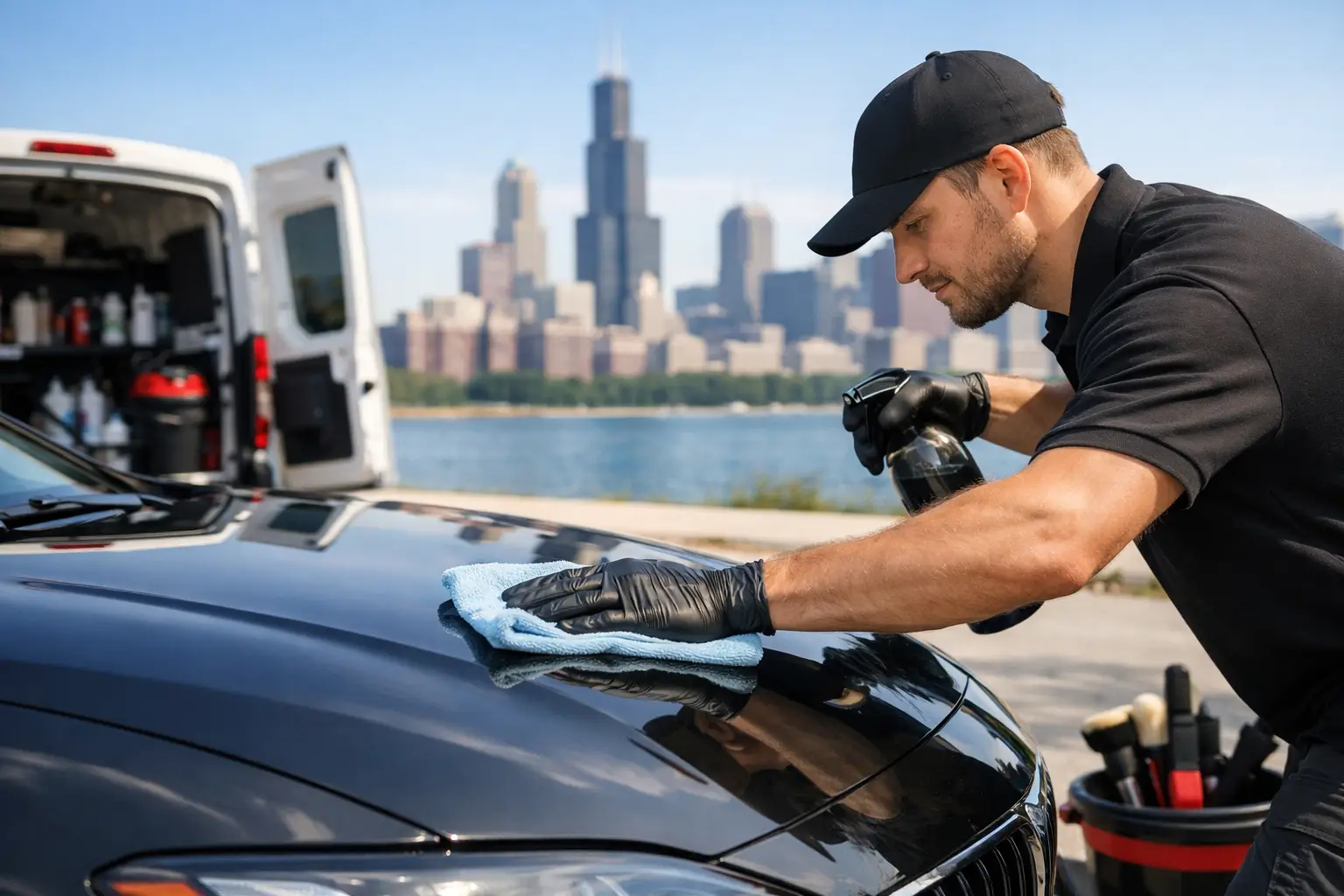
A busy week can show up on a vehicle quickly. Salt residue gathers behind the wheels, coffee finds its way into the console, and a clean black finish suddenly looks dull under a parking lot light. This mobile car detailing guide explains how professional on-site care works, what results to expect, and how to decide whether mobile service is the right fit for your vehicle.
For drivers across the Chicago suburbs, convenience is only part of the value. Quality mobile detailing brings trained hands, professional-grade products, and a controlled process to your home or workplace, helping preserve the condition of a vehicle without giving up a Saturday at a car wash.
What Mobile Car Detailing Actually Includes
Mobile detailing is not a quick rinse in a driveway. A professional service is designed to clean, restore, and protect the vehicle with more care than an automatic wash can provide. The exact scope depends on the vehicle’s condition and the service selected, but the goal remains the same: deliver a noticeably cleaner, more refined finish while treating every surface correctly.
Exterior work often begins with a safe hand wash that lifts road film, dirt, and seasonal buildup without grinding contaminants into the paint. Wheels, tires, wheel wells, door jambs, trim, and glass receive focused attention. A quality detailer uses separate tools for higher-soil areas and painted surfaces to reduce the chance of transferring grit where it does not belong.
Interior detailing is equally deliberate. Vacuuming alone does not remove oils from touchpoints, residue from cup holders, pet hair from carpet fibers, or embedded debris from seat creases. Depending on the service, the process may include upholstery cleaning, leather conditioning, careful cleaning of vents and controls, stain treatment, interior glass cleaning, and odor treatment.
The difference is in the finish. The vehicle should not simply look wet for an afternoon. It should feel clean at the touchpoints, present a clear and even appearance, and have surfaces protected in a way that fits how it is used.
When Mobile Detailing Is the Best Choice
Mobile service works especially well for vehicles that need consistent maintenance, an interior reset, or a thorough wash and protection service at a convenient location. It is a practical option for professionals who cannot leave the office, families managing packed schedules, and owners who prefer their vehicle cared for at home.
It can also be an excellent fit for newer cars. Regular professional maintenance helps keep brake dust, road grime, UV exposure, spilled drinks, and winter residue from becoming harder-to-correct issues. Rather than waiting until the interior feels worn or the paint loses its crispness, scheduled care keeps the vehicle closer to its best condition year-round.
There are limits, and a dependable detailer should be clear about them. Severe paint correction, ceramic coating installation, heavy stain extraction, overspray removal, or advanced odor remediation may be better performed in a studio. These services often require extended curing time, controlled lighting, stable temperatures, or equipment that cannot be responsibly duplicated in a driveway or office lot.
Chicago weather also affects the decision. Mobile detailing is most effective when conditions allow safe washing and drying. Heavy rain, freezing temperatures, strong winds, or extreme heat can compromise both the process and the final result. In those cases, a studio appointment may protect the vehicle and produce a more consistent finish.
How to Prepare for a Mobile Detailing Appointment
A little preparation allows the detailer to spend more time improving the vehicle and less time working around avoidable obstacles. You do not need to pre-clean the car. In fact, its current condition helps the professional assess what it needs. Simply remove personal valuables, important documents, loose clothing, and any items you would rather not have moved.
If possible, provide access to a driveway, garage, or designated parking space with enough room for doors to open fully. Shade is helpful, particularly during warmer months, because it keeps panels cooler and makes it easier to inspect the finish. Many mobile detailers bring their own water and power setup, but it is still wise to confirm site requirements before the appointment.
Let the detailer know about specific concerns in advance. Mention a lingering smoke odor, pet hair, spilled milk, tree sap, paint transfer, a scratch you want assessed, or a prior coating on the vehicle. Clear information helps set realistic expectations and ensures the right products and time are allocated.
For workplace appointments, confirm parking rules and access restrictions. A premium result requires more than a convenient address. The technician needs a safe, legal space to work without blocking traffic or exposing the vehicle to unnecessary risk.
Choosing the Right Level of Service
The best package is not always the biggest package. It is the one that addresses the vehicle’s current condition and your ownership goals.
A maintenance detail makes sense for a vehicle that is already cared for and needs recurring exterior and interior attention. This is often the most cost-effective path for commuters, leased vehicles, and families who want their car to stay presentable without waiting for a major cleanup.
A deeper interior detail is appropriate when stains, odors, pet hair, neglected surfaces, or accumulated debris are affecting comfort and cleanliness. For a vehicle you drive every day, the interior is where the value of detailing is felt most immediately. Clean seats, fresh carpeting, clear glass, and properly cleaned touchpoints change the entire driving experience.
For the exterior, distinguish between cleaning and correction. A wash, decontamination, and protective sealant can dramatically improve gloss and water behavior. However, it will not permanently remove deeper scratches, swirls, oxidation, or etched water spots. Paint correction is a separate, more intensive service that levels or reduces visible defects through measured polishing. It can create a remarkable transformation, but the proper approach depends on paint thickness, defect severity, and the owner’s expectations.
Ceramic coating is another area where clear expectations matter. A quality coating provides durable chemical resistance, enhanced gloss, easier maintenance, and strong water repellency. It does not make paint scratch-proof, eliminate the need for washing, or repair existing damage. The lasting value comes from appropriate preparation and professional installation, not from a label alone.
What Quality Looks Like After the Detail
When the work is complete, take a moment to inspect the vehicle with the detailer. Look at the paint from more than one angle, especially around lower panels, mirrors, door handles, and the rear hatch or trunk area where road film tends to collect. Check the glass for streaks and the wheels for remaining brake dust.
Inside, the result should feel detailed rather than heavily perfumed. A strong fragrance can mask odors temporarily, but it does not resolve the source. Quality interior work leaves seats, mats, trim, and touchpoints clean without greasy residue. Leather should look natural, not shiny. Screens and piano-black trim should be handled carefully to avoid unnecessary marks.
Perfection is not always realistic on a well-used vehicle. Permanent dye stains, worn leather, pitted paint, deep scratches, and aged plastic may require repair or replacement beyond detailing. A professional will point out these distinctions rather than promising results the material cannot deliver.
Keeping the Results Longer
Your habits after the appointment determine how long the vehicle stays at its best. Remove spills promptly, avoid wiping dry dust from the paint, and use a clean microfiber towel with a proper detailing product for light touch-ups. Dry wiping is a common cause of fine scratches, especially on dark paint.
During winter, regular washing matters even more. Road salt and slush collect around rocker panels, wheel wells, and lower doors, where they can dull finishes and accelerate corrosion concerns. A simple maintenance schedule is usually more effective than letting contamination build up until spring.
For coated or freshly protected vehicles, use pH-balanced wash products and avoid harsh tunnel washes with abrasive brushes. Touchless washes can be useful between appointments, but they may not fully remove traffic film. They are a convenience tool, not a replacement for careful hand washing and periodic professional care.
For owners who value a consistent standard without constantly managing it, a recurring maintenance plan can make sense. Elite Luxe Auto Detailing helps Chicagoland drivers pair convenient mobile care with studio services when the vehicle requires a more controlled environment.
The right mobile detail should make vehicle care easier without lowering the standard. Choose a service that evaluates the condition honestly, explains what can be achieved, and protects the surfaces that matter to you. A well-maintained vehicle does more than look impressive when it is clean – it continues to feel like a vehicle worth owning every time you open the door.
