
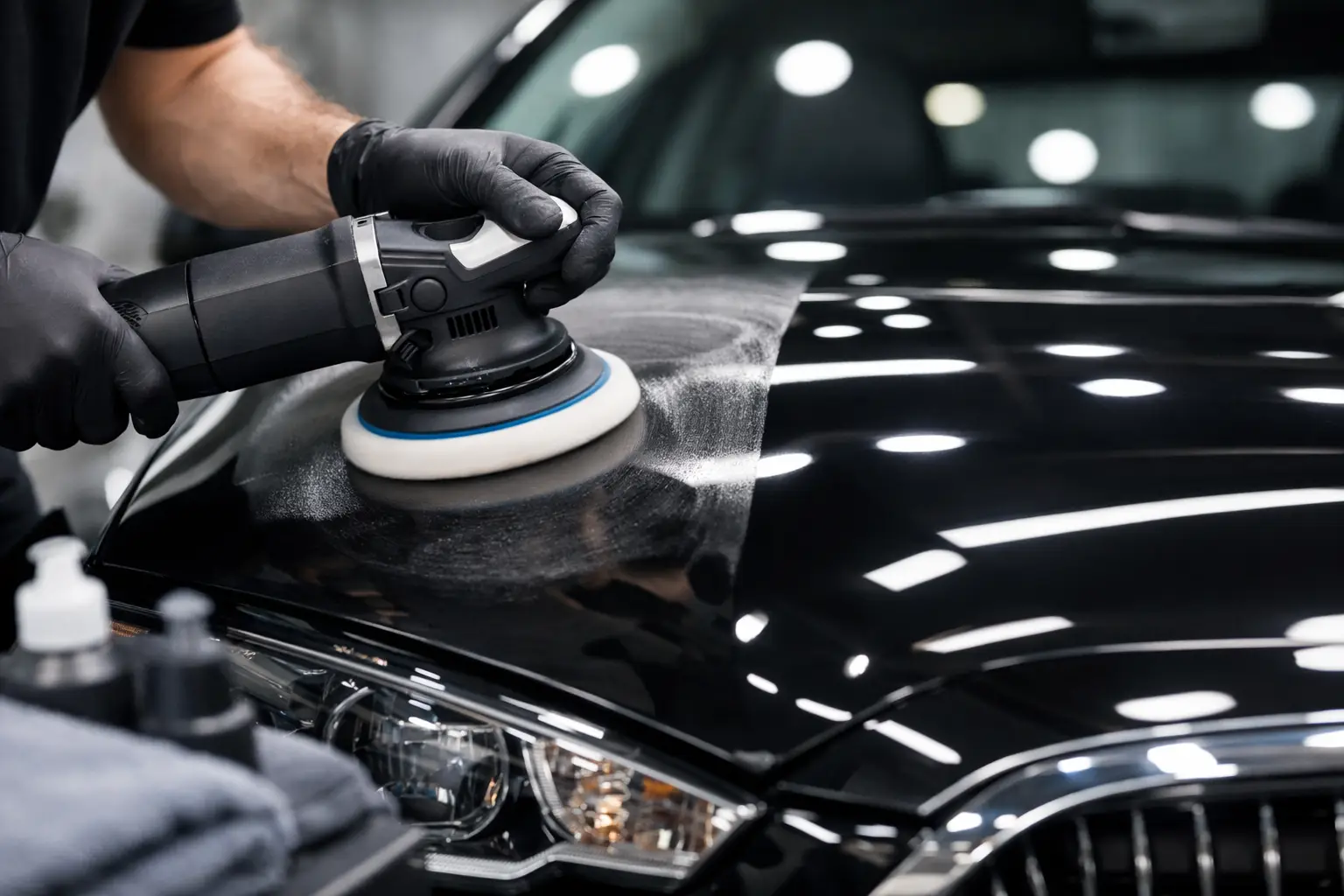
The difference between a car that looks clean and one that looks exceptional usually comes down to the paint. Under garage lights or direct sun, swirl marks, light scratches, haze, and oxidation show up fast. A proper paint correction guide should help you understand what those defects are, what can actually be removed, and when professional correction makes more sense than a quick polish.
What paint correction really means
Paint correction is the process of removing imperfections from a vehicle’s clear coat through controlled machine polishing. The goal is not to hide defects for a few days. It is to level the surface enough to reduce or eliminate visible marks so the paint reflects light more evenly.
That matters because most modern vehicles have a clear coat over the color layer. When that clear coat is scratched or dulled, the finish loses depth and gloss. Correction restores clarity by refining the surface, not by masking it with fillers or temporary shine products.
This is also where expectations need to stay realistic. Not every scratch can be safely removed. If damage runs too deep, aggressive polishing may create more risk than benefit. Good correction is about measurable improvement and paint preservation, not chasing perfection at any cost.
What paint correction can and cannot fix
A quality paint correction guide should be honest about results. Paint correction can often remove swirl marks from automatic car washes, towel marring, light water spot etching, mild oxidation, haze, and many surface-level scratches. It can also dramatically improve gloss on darker colors, where defects tend to show the most.
It cannot fix rock chips, peeling clear coat, deep gouges that pass through the clear, or paint failure caused by age or poor prior bodywork. In those cases, sanding, touch-up work, or repainting may be the proper solution.
The key is diagnosis. Two vehicles can look similar from ten feet away and need completely different correction plans under inspection lighting. That is why experienced detailers test a small section first before deciding on pad choice, polish, and the number of stages.
Why your car gets swirls in the first place
Most paint defects come from routine washing and drying, not dramatic damage. Automatic tunnel washes, reused sponges, bath towels, dirty wash mitts, and rushed drying all drag fine debris across the surface. Over time, those tiny marks scatter light and make the paint look dull.
Chicago-area driving adds its own challenges. Road salt residue, seasonal grime, hard water spotting, and airborne contamination can all shorten the life of a nice finish if the paint is not cleaned and protected properly. Even newer vehicles can arrive with defects from dealership prep, where quick buffing and improper washing leave behind visible trails.
The paint correction process, step by step
A professional process starts well before the machine polisher touches the paint. The vehicle is thoroughly washed to remove loose dirt, then chemically and mechanically decontaminated to pull bonded contaminants from the surface. If that step is skipped, polishing can drag contamination across the paint and create more marring.
Next comes inspection. Under strong lighting, the detailer evaluates swirl severity, scratch depth, previous repair work, and overall paint condition. Paint thickness readings may also be taken, especially on higher-end vehicles or any car with an uncertain history. This helps determine how much correction is safe.
Then comes the test spot. A small section is polished using the least aggressive combination likely to achieve the desired result. This is one of the most important parts of the process because it balances finish quality with clear coat preservation. If a lighter polish delivers strong results, there is no reason to step up to something more aggressive.
Once the process is dialed in, the rest of the vehicle is corrected panel by panel. Some cars need a one-step correction, which focuses on improving gloss and removing a meaningful amount of light defects in a single polishing stage. Others benefit from a two-step correction, where a cutting stage removes heavier imperfections and a finishing stage refines the paint for added depth and clarity.
After polishing, the paint is wiped down to remove any polishing oils so the true finish can be inspected. At that point, the corrected paint should be protected. Ceramic coating, paint sealant, or another durable protection layer helps preserve the freshly refined surface and makes future cleaning easier.
One-step vs. two-step correction
This is where budget, goals, and paint condition all come into play. A one-step correction is often the right fit for daily drivers that need a strong visual upgrade without pursuing near-show-car refinement. It can remove a good portion of light defects while noticeably improving color depth and gloss.
A two-step correction is more intensive and usually chosen for darker vehicles, enthusiast-owned cars, or anyone preparing a vehicle for ceramic coating and wanting the finish as refined as possible first. It delivers a higher level of defect removal, but it also requires more time, labor, and cost.
Neither option is automatically better. The right choice depends on what you want to see when the car is in direct sunlight, how long you plan to keep it, and how carefully you intend to maintain it afterward.
Is DIY paint correction worth it?
For some owners, a light enhancement polish on a daily driver can be a reasonable DIY project. But true paint correction has a learning curve. Machine choice, pad selection, polish behavior, paint hardness, heat management, and lighting all affect the outcome. Without experience, it is easy to leave haze, miss defects, or remove more clear coat than necessary.
That risk goes up on black paint, soft paint systems, repainted panels, and luxury or exotic vehicles where the finish needs to be consistent across every surface. A product may claim to be beginner-friendly, but the result still depends on technique and inspection.
If the vehicle is newer, high-value, or scheduled for ceramic coating, professional correction usually makes more sense. You only get so much clear coat to work with, and preserving it matters.
How to know if your vehicle needs correction
If the paint looks gray instead of glossy in the sun, if circular swirls show under parking lot lights, or if the finish feels rough even after a wash, correction may be the next step. Another common sign is when wax no longer seems to improve the look of the paint for more than a very short time. That often means the issue is below the surface gloss level, not a lack of shine product.
Owners who are getting ready to sell or trade in a vehicle also tend to see strong value here. Corrected paint photographs better, presents better in person, and gives the impression of a better-maintained car overall.
What to ask before booking service
Not all polishing is true correction. Some shops use the term loosely for a fast gloss enhancement. Ask what level of defect removal is realistic, whether the process includes decontamination and a test spot, and what type of protection is recommended after correction. If a service promises perfect paint at a very low price, that usually means shortcuts somewhere in the process.
It is also worth asking how the vehicle should be maintained afterward. Even excellent correction can be undone by poor washing habits. The best result is not just a better finish on delivery day. It is a finish that still looks sharp months later because it was properly protected and cared for.
For owners in Arlington Heights and surrounding suburbs, convenience matters too. Whether the work is done in a studio or through a qualified mobile setup, what counts is the process, lighting, tools, and consistency behind the result.
A smarter way to think about this paint correction guide
Paint correction is not about making a car look artificially glossy for a weekend. It is about restoring clarity, improving how the paint reflects light, and protecting the long-term appearance of a vehicle you care about. When the process is done properly, the car does not just look cleaner. It looks sharper, richer, and better cared for every time you walk up to it.
