
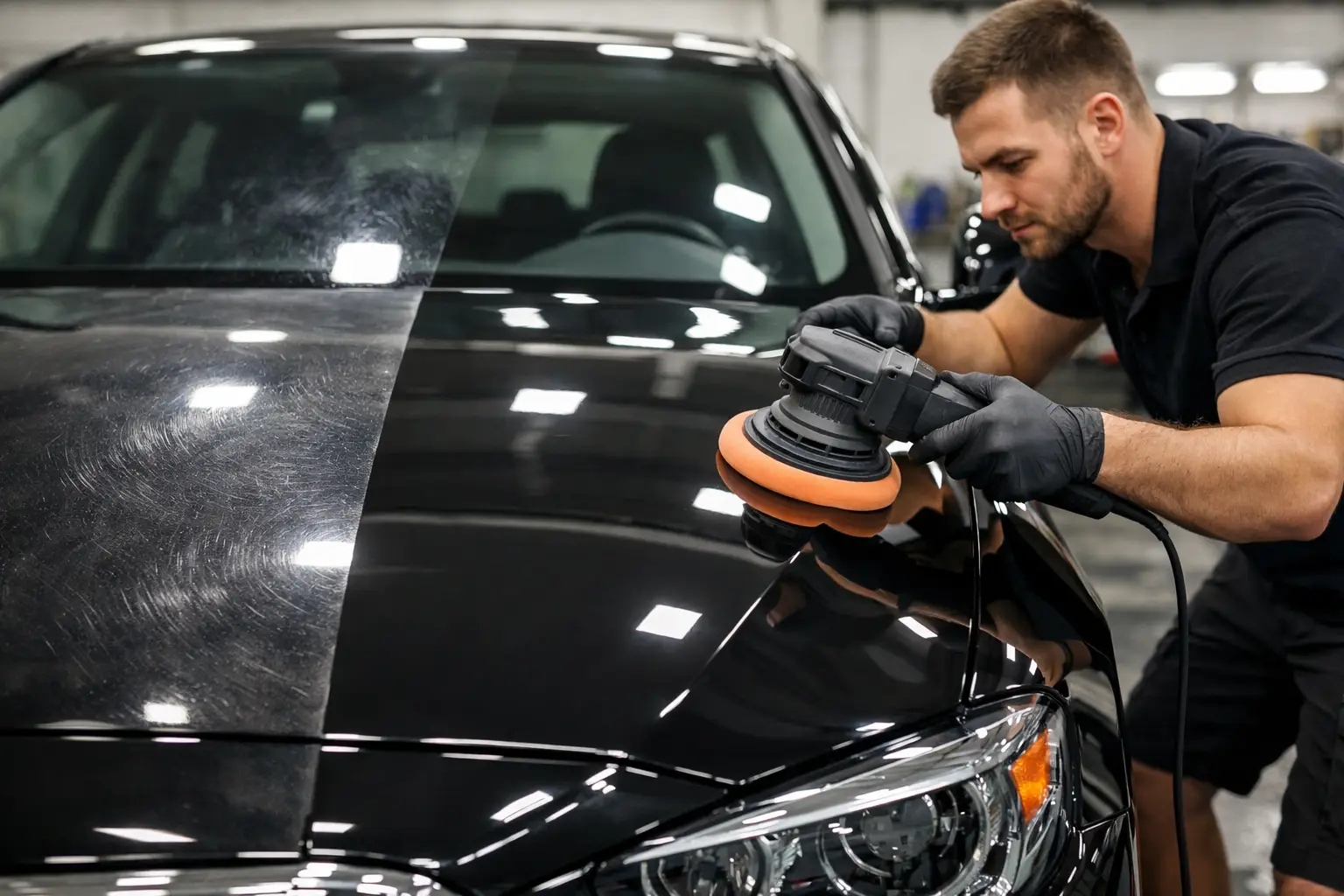
A vehicle can be freshly washed and still look tired under Arlington Heights sunlight. Fine swirls, haze, water-spot etching, random scratches, and dullness change the way paint reflects light. Professional paint correction Arlington Heights vehicle owners choose is designed to address those defects at their source, restoring the clarity and gloss that a basic wash, wax, or quick polish cannot deliver.
Paint correction is not a cover-up. It is a measured process that refines the clear coat to reduce visible imperfections while preserving as much paint as possible. For daily drivers, family SUVs, luxury sedans, and weekend vehicles alike, the right correction service can make the finish look dramatically cleaner and more valuable.
What Paint Correction Actually Does
Modern automotive paint has a clear protective layer over the color coat. Most light scratches and swirl marks live in that clear coat, not in the color itself. They scatter light instead of reflecting it evenly, which is why a dark vehicle may look gray, hazy, or heavily marked in direct sun even after it has been cleaned.
Paint correction uses professional machine polishing, pads, compounds, and finishing polishes to level the surface around those defects. The goal is to reduce the contrast between the imperfection and the surrounding paint. When performed correctly, the result is sharper reflections, deeper color, and a noticeably smoother-looking finish.
Some defects are too deep to remove safely. A scratch that catches a fingernail, reaches the color coat, or exposes primer may need touch-up paint or a different repair method. A reputable detailer will explain that distinction rather than promise perfection where it is not possible.
Why Swirls and Dull Paint Build Up
Most paint damage is gradual. Automatic car washes, dirty wash mitts, dry wiping, snow brushes, road grime, and poor drying habits can all leave fine marks over time. Chicago-area weather adds its own challenges. Winter salt, spring pollen, hard-water spotting, summer UV exposure, and construction fallout can all affect the appearance and condition of a vehicle’s finish.
Even careful owners can develop paint defects. A commuter vehicle parked outside sees more environmental exposure than a garage-kept weekend car. A black SUV often shows swirls more easily than a silver sedan. The condition of the paint, how it has been washed, and what it has been exposed to matter more than the age of the vehicle alone.
When Is Paint Correction Worth It?
Paint correction is worth considering when the paint looks dull despite regular washing, sunlight reveals heavy swirl marks, or you want a ceramic coating to look as good as it performs. It is also a smart choice before selling a well-maintained vehicle, returning a lease when appearance matters, or preparing a recently purchased used car for long-term ownership.
For luxury and exotic vehicles, correction is often part of proper preservation. These vehicles deserve careful inspection, conservative polishing choices, and a finish that complements their design. The same standard benefits a daily driver, especially when restoring a finish can help the vehicle feel newer and more enjoyable to own.
It may not be the right first step for every vehicle. If the paint is severely peeling, has widespread clear-coat failure, or is covered in deep chips and gouges, paint correction cannot replace bodywork or repainting. Likewise, a vehicle that will continue through frequent tunnel washes may not justify an extensive multi-stage correction until its wash routine changes.
The Paint Correction Process in Arlington Heights
Quality results begin well before the polishing machine is turned on. Paint correction should be a controlled process, not a fast add-on performed after a wash.
Inspection and Paint Assessment
The vehicle is inspected under proper lighting to identify swirl marks, oxidation, water spots, scratches, and isolated damage. Paint thickness can be measured when appropriate, particularly on older, repainted, luxury, or high-value vehicles. This helps determine the safest approach for each panel.
Not every surface needs the same level of correction. A hood exposed to heavy sun may need more refinement than a protected lower door panel. A detailer should tailor the work to the vehicle rather than use one aggressive combination everywhere.
Decontamination Before Polishing
The exterior is thoroughly washed and decontaminated to remove bonded particles that normal washing leaves behind. Iron residue, tree sap, overspray, and embedded road contamination can interfere with polishing and create more marring if left on the surface.
This preparation stage is one reason professional correction produces a more consistent result. Polishing contaminated paint is like trying to clean glass with grit still on the towel. The finish needs to be clean before it can be refined.
Test Spot and Controlled Refinement
A test spot establishes which pad, polish, machine speed, and technique deliver the best improvement without unnecessary clear-coat removal. Depending on the paint condition and the owner’s goals, the service may involve a lighter enhancement polish or a more involved multi-stage correction.
A one-step correction can significantly improve gloss and reduce common swirl marks. It is often a practical choice for newer daily drivers or vehicles receiving regular maintenance. A multi-stage correction can provide a more dramatic result on heavily marred paint, but it requires additional time and labor. More correction is not automatically better. The safest effective level is usually the right one.
Final Inspection and Protection
After polishing, the finish is inspected again under different lighting conditions. Polishing oils are removed so the true condition of the paint can be evaluated. The corrected surface is then ready for protection, whether that means a quality sealant, wax, or ceramic coating.
Why Protection Matters After Correction
Paint correction improves the surface. It does not make paint immune to new scratches, road salt, bird droppings, or UV exposure. Without protection and proper maintenance, fresh defects can slowly return.
Ceramic coating is a natural next step for many owners because it adds durable protection, strong gloss, and easier maintenance. It helps limit contamination bonding to the surface and makes routine cleaning more manageable. A coating does not prevent rock chips or eliminate the need for washing, but it can preserve the corrected finish more effectively than an unprotected vehicle.
The best option depends on how the vehicle is used. A garage-kept sports car may need a different protection plan than a family SUV driven through winter weather every day. The key is choosing a realistic maintenance plan that fits the owner, not just the vehicle.
How to Keep Corrected Paint Looking Its Best
After correction, washing technique matters. Use clean, high-quality wash media, avoid wiping dry dust from the paint, and dry with soft microfiber towels and proper lubrication. Automated car washes with abrasive brushes can quickly reintroduce the same swirls correction was meant to reduce.
Regular maintenance detailing is a practical way to protect the investment. It removes seasonal buildup before it becomes harder to address and keeps the vehicle looking consistently cared for between more extensive services. For busy professionals and families, that consistency is often more valuable than chasing a one-time perfect finish.
Choosing the Right Detailer
Paint correction requires judgment as much as equipment. Look for a detailer who inspects the paint, discusses realistic outcomes, explains the protection options, and treats thin or sensitive paint conservatively. Before-and-after results are useful, but clear communication about limitations is equally important.
Elite Luxe Auto Detailing approaches correction with that balance in mind: visible improvement, careful workmanship, and protection plans suited to how each vehicle is actually driven. Whether the goal is renewed gloss for a daily commuter or a refined finish for a prized vehicle, the right service should leave the paint looking better without taking unnecessary risks.
The most satisfying result is not simply a brighter vehicle on pickup day. It is seeing clean, crisp reflections every time you walk back to your car, knowing its finish has been restored and given a better chance to stay that way.
