
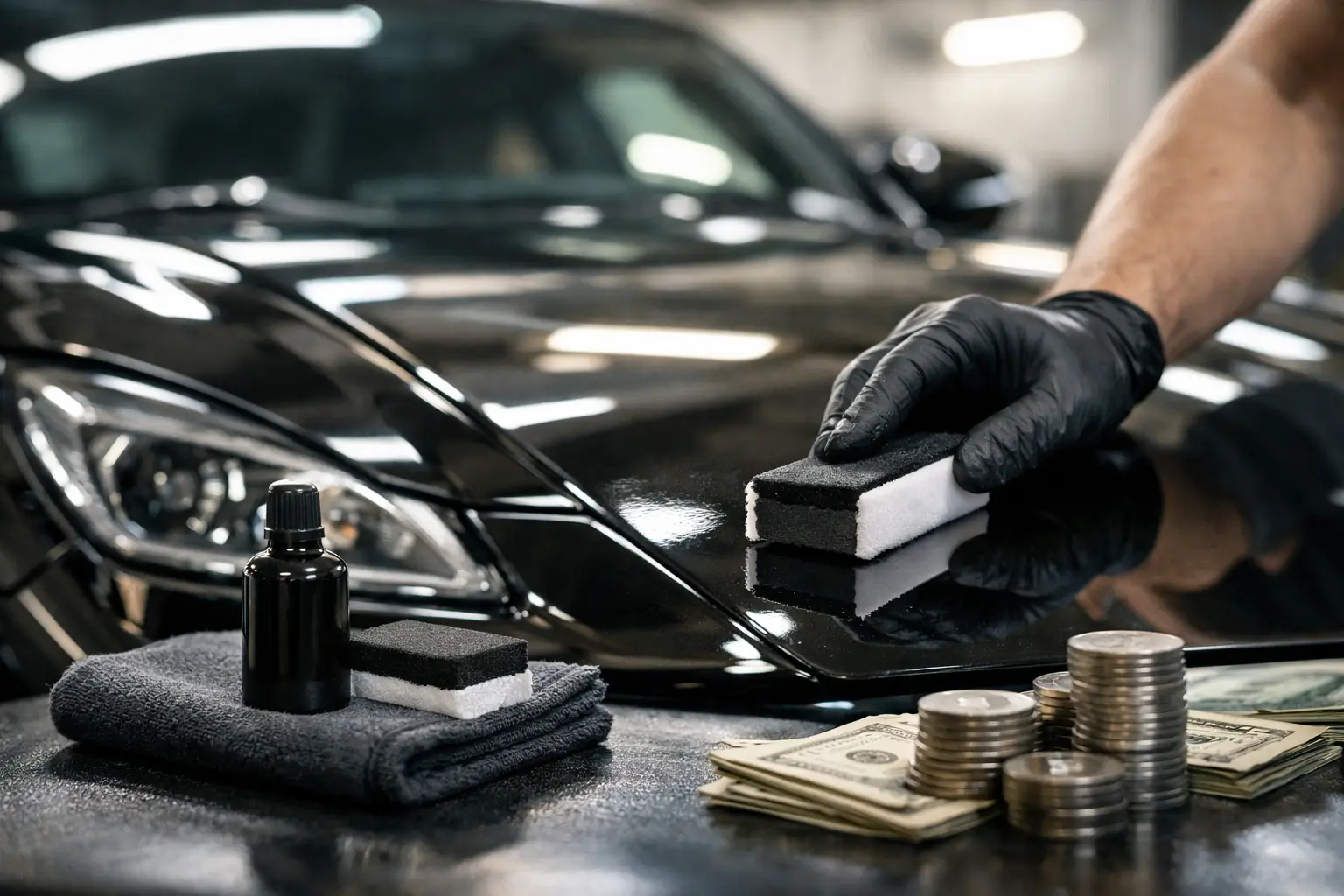
A premium ceramic coating price can feel surprisingly wide until you see what is actually being purchased. One shop quotes a few hundred dollars, another quotes several thousand, and both call it ceramic coating. The difference usually comes down to prep work, paint condition, coating quality, installer skill, warranty coverage, and whether the results are built to last or just look good for a few weeks.
Why premium ceramic coating price varies so much
Ceramic coating is not a single product with a fixed market rate. It is a service, and the product itself is only one part of the total cost. The coating bottle matters, but the labor behind it matters more.
A true premium package often includes deep decontamination, paint inspection, polishing or paint correction, careful panel prep, controlled application, curing time, and aftercare guidance. That process takes time, experience, lighting, and discipline. If the vehicle has swirl marks, oxidation, water spots, or dealership-installed scratches, the coating will lock those defects in unless they are corrected first.
This is why the same SUV can have a much lower quote at one place and a much higher quote at another. One may be pricing a basic layer of protection over imperfect paint. The other may be pricing the finish most owners actually expect – stronger gloss, better clarity, easier maintenance, and a more refined result.
What is usually included in a premium ceramic coating price
When customers compare estimates, they often focus on the final number without comparing the scope. That is where confusion starts.
A premium ceramic coating price usually includes an exterior wash, chemical decontamination to remove embedded fallout, clay treatment if needed, paint assessment, some level of machine polishing, coating application, and curing procedures. In many cases, the package may also cover painted surfaces, trim, wheels, and glass, depending on the service level.
The paint correction stage is often the biggest value driver. If your vehicle is black, dark blue, or another color that shows every flaw, this step is especially important. The coating adds gloss and protection, but it does not replace correction. If the paint is hazy before the coating, it will still be hazy after.
Warranty-backed installations can also affect price. A warranty is not just a marketing extra. It usually reflects the coating brand, installer authorization, and process consistency required to stand behind long-term performance.
Typical price ranges you can expect
For most vehicles, premium ceramic coating pricing lands in a broad but understandable range. An entry-level professional coating package may start around $800 to $1,200 for a smaller vehicle with light prep needs. Mid-tier packages often range from $1,200 to $2,000, especially when they include meaningful polishing and multi-year protection.
High-end installations can run from $2,000 to $3,500 or more for larger vehicles, darker paint, luxury or exotic models, and multi-step correction before coating. If the paint needs intensive defect removal, the labor can rise quickly because correction is time-heavy and skill-sensitive.
That range may sound high if you are comparing it to waxes or spray sealants. It makes more sense when you compare it to repeated polishing, seasonal protection services, and the cost of neglect. Better protection and easier maintenance can reduce how often the paint needs more aggressive restoration later.
The biggest factors that affect cost
Vehicle size is the obvious one. A compact sedan simply has less painted surface than a full-size SUV or truck. Larger vehicles require more product, more prep time, and more labor.
Paint condition is often the less obvious factor, but it is usually the more important one. A newer vehicle is not always easier. Brand-new cars frequently arrive with wash marring, transport film residue, water spotting, or dealer prep damage. A well-kept three-year-old car may need less work than a new one that has been rushed through poor washing practices.
The level of correction also changes the number significantly. A one-step polish to improve gloss and reduce moderate swirl marks costs less than a multi-step correction aimed at maximizing clarity. Neither is automatically right or wrong. It depends on your expectations, your paint, and how close to perfection you want the finish.
Coating type matters too. Some professional-grade coatings are designed for multi-year durability, stronger chemical resistance, and better environmental performance. Others are shorter-term offerings positioned more as an upgrade from conventional paint protection. Both have their place, but they should not be priced or presented as if they are the same.
Cheap ceramic coating vs premium results
If one quote is dramatically lower than the rest, ask what is missing. Sometimes the answer is prep. Sometimes it is paint correction. Sometimes it is a lower-end coating or a rushed application. And sometimes it is simply a volume model where the goal is speed, not finish quality.
There is nothing wrong with wanting a budget-friendly option if your vehicle is older or you are keeping costs tight. The problem starts when a budget service is marketed like a premium one. A lower price may still be fair for a simpler package, but it should come with honest expectations.
Premium results are usually visible in the details. Gloss has more depth. Reflections look cleaner. Water behavior is stronger and more consistent. The finish is easier to wash, and contaminants release more easily. Just as important, the installer can clearly explain what you are getting, how long it should last, and how to maintain it.
Is the premium ceramic coating price worth it?
For many owners, yes – if they value appearance, easier upkeep, and long-term paint protection. It can be especially worthwhile for people who keep their vehicles for years, drive daily in Midwest weather, or want to preserve a newer purchase before wear starts showing.
It may also make sense for luxury and exotic vehicles where finish quality matters more and paint correction costs can become even higher later. Protecting a high-end finish early is usually less expensive than trying to revive neglected paint after years of improper washing and exposure.
That said, it is not the right fit for every car or every owner. If the vehicle is nearing the end of its life cycle, has severe paint failure, or is rarely cleaned, a premium coating may not deliver the value you expect. The right shop should tell you that honestly.
How to compare quotes the right way
Start by asking what level of paint correction is included. Then ask which surfaces are being coated, how long the protection is expected to last, whether the coating is warranty-backed, and what aftercare is recommended.
You should also ask whether the vehicle will be inspected before final pricing. Serious pricing often depends on the actual condition of the paint, not just the make and model. A shop that gives every car the same quote without seeing it may be simplifying the process too much.
Photos of prior work, customer reviews, and process transparency matter. For drivers around Arlington Heights and nearby suburbs, convenience matters too. A premium experience is not only about the finish on delivery day. It is also about clear communication, realistic timelines, and confidence that your vehicle is in experienced hands.
What you are really paying for
At the higher end, you are paying for craftsmanship as much as chemistry. The coating itself is only effective when the surface beneath it has been properly cleaned, corrected, and prepared. That takes trained eyes, patience, and standards that do not slip when the schedule gets busy.
You are also paying for consistency. A premium detailer does not chase a quick shine. The goal is a finish that looks better immediately and stays easier to care for over time. That is a different service than a wash-and-go upgrade labeled as ceramic.
For many customers, the best value is not the cheapest quote or the highest quote. It is the one that aligns with the vehicle’s condition, your expectations, and the level of protection you actually plan to maintain. A well-executed coating should make ownership easier, keep the paint looking sharper, and give you confidence every time the car is parked in the sun.
